
Software development
Website Development Company: Custom Business Websites That Load Fast and Bring In Leads
Written scope and quote after the call. NDA on request. You own the code.
Quick answer
We are a website development company with a 16-person in-house engineering team in San Francisco. We build custom business websites and commerce sites that pass Google's Core Web Vitals, say clearly who you serve, and send every enquiry into your CRM (GoHighLevel, HubSpot, monday.com or Pipedrive). Our builds run 5 to 8 weeks; one B2B travel site tripled its qualified enquiries in its first quarter.
Builds like this

Part of the guide: Software development
Key takeaways
- Our website builds took 5 to 8 weeks: Internet Travel Solutions in 5, Loop Biolabs in 6, Cyrano Brands and Drop My Drip in 8.
- After launch, Internet Travel Solutions saw qualified enquiries rise 3.4x in the first quarter and average time on site go from 40 seconds to 3 minutes 20.
- Google's good thresholds for Core Web Vitals are LCP within 2.5 seconds, INP under 200 milliseconds and CLS under 0.1, measured at the 75th percentile of page loads (checked Oct 31, 2026).
- A website that brings in leads needs a form that asks qualifying questions and sends each enquiry, with its source, into a CRM pipeline with an automatic reply.
- Websites are quoted on scope, project-based or hourly. Each one is scoped and quoted in writing after a free 30-minute call.
We are a website development company that builds custom business websites and commerce sites with our own 16-person engineering team in San Francisco. A website we build has three jobs: say in the first screen who you serve and what you do, load fast enough to pass Google’s Core Web Vitals, and send every enquiry into your CRM with an automatic reply and an owner. It suits B2B firms whose site undersells them, brands selling online, and service businesses whose leads go missing between the form and the sales team. Our website builds ran 5 to 8 weeks. For Internet Travel Solutions, a B2B travel technology company serving airlines, the new site was delivered in 5 weeks including content structure and copy, and qualified enquiries rose 3.4x in the first quarter.
From our Internet Travel Solutions, Drop My Drip and Loop Biolabs case studies.
What is included in a website development build?
Your website build includes everything from the page structure to launch and handover: the deliverables below, for business websites, B2B sites for complex services, and commerce sites where the product needs more than a standard theme.
| Deliverable | What it includes |
|---|---|
| Information architecture | Pages organised by the visitor’s situation, not your internal service names; sitemap and URL plan |
| Content structure and copy layout | Page-by-page outline, headings that match how buyers search, proof placed where it is needed |
| UI design | Desktop and mobile designs for each template, built from a small design system |
| Front-end build | Fast, accessible templates; images sized and lazy-loaded; no layout shift |
| Content management | A CMS your marketing team can edit without a developer |
| Lead capture | Forms that qualify, route by client type, and send to your CRM with source and campaign |
| Commerce (when needed) | Storefronts, product configuration, checkout, order routing |
| Search and analytics | Titles, meta, schema markup, XML sitemap, redirects from the old site, GA4 and Search Console |
| Launch and handover | Domain and hosting set up in your name, recorded video walkthrough and written documentation, code in your repository |
Not included: hosting bills, your domain, CMS or theme licences, CRM subscriptions and other third-party tools, which you pay to those vendors directly. Support after launch is billed per hour.
Case studies: websites our team built

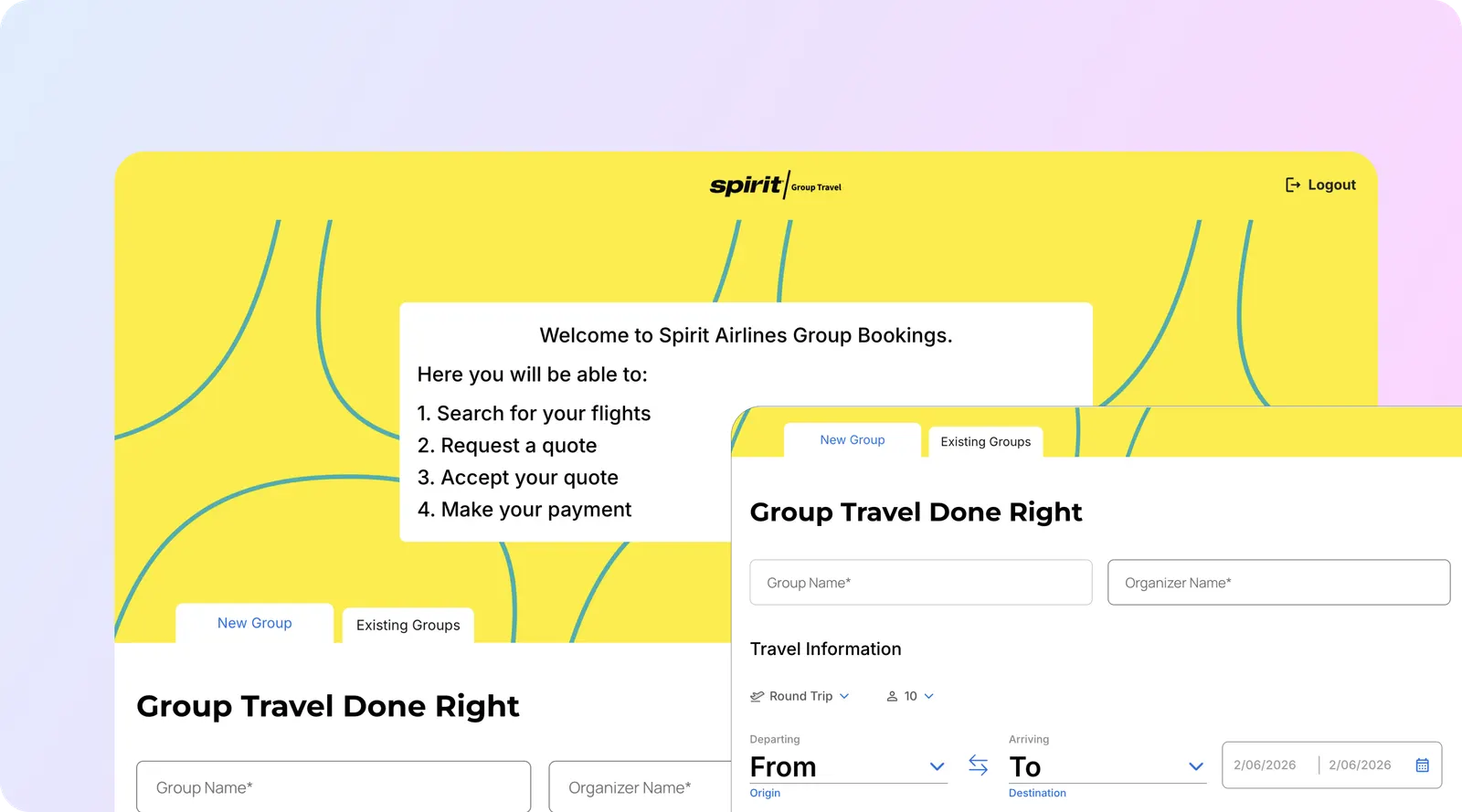
Internet Travel Solutions (ITS). ITS sells enterprise services to airlines, and its old site could have belonged to any B2B firm. Salespeople spent first meetings re-establishing credibility the site should have carried. We organised the site by client type and operational problem, rewrote service pages around specific scenarios and systems, built case study templates for procurement, and added an enquiry flow that routes by client type and captures qualification up front, all on a CMS marketing can maintain. Result: qualified enquiries up 3.4x in the first quarter, time on site from 40 seconds to 3 minutes 20, mobile bounce rate down 34 points, and an estimated two weeks off the sales cycle.
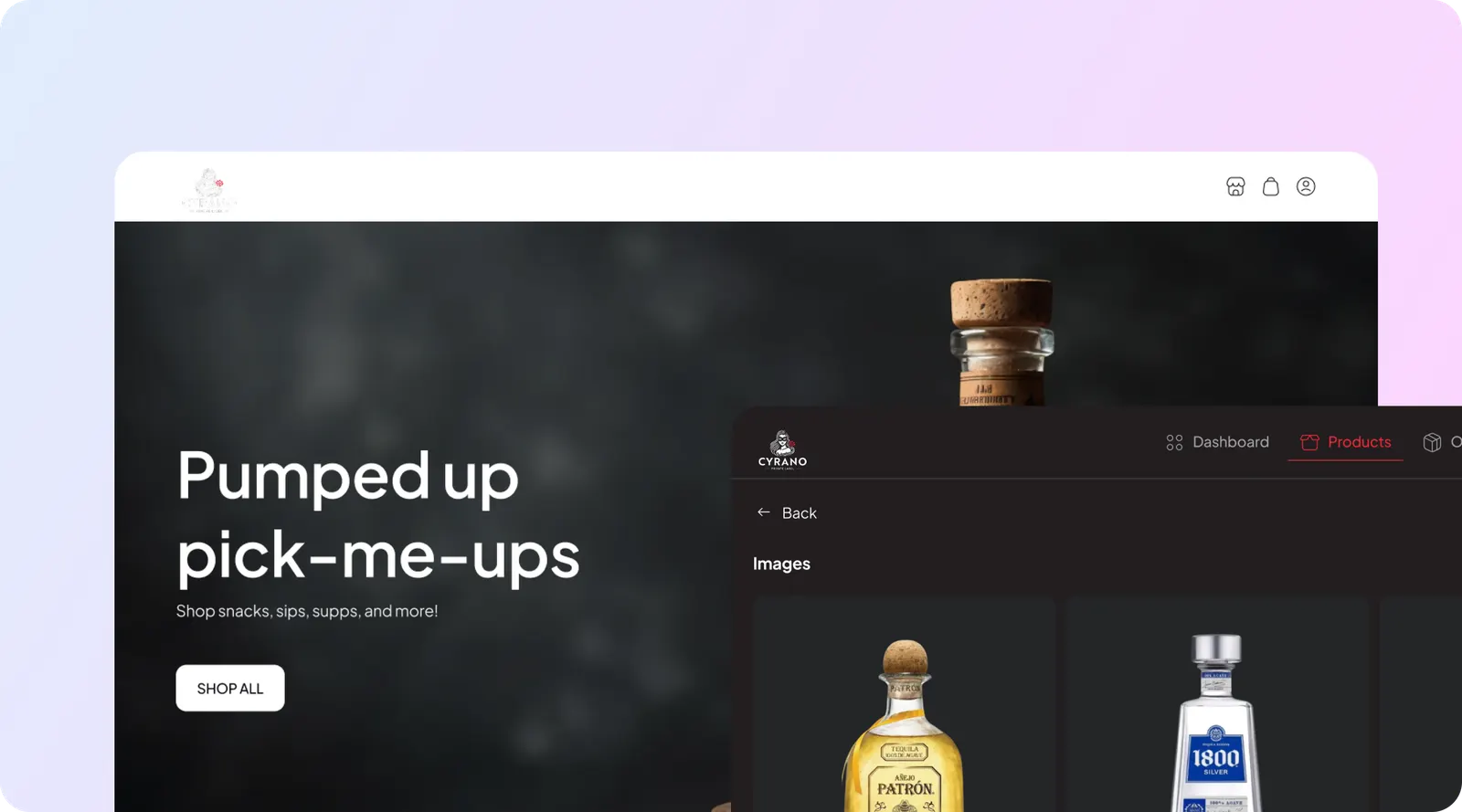
Cyrano Brands. Creators wanted their own product lines without stock, minimum orders or a manufacturer. We built a storefront builder styled to each creator’s brand, on their own domain if they want one, with live mockups, production triggered on order and a revenue dashboard by product and traffic source. Result: 340 creator stores in the first year, signup to a live store in 48 hours, and $6.8M in creator revenue processed.

Drop My Drip. Custom apparel loses money on returns, and most returns trace back to a flat mockup that looked nothing like the garment. We built a guided design canvas and previews that render designs onto garment photography with fabric drape and print texture, with print checks before checkout. Result: a 4% return rate against 23% typical for online apparel, design to checkout in 11 minutes on average, and 62% of customers ordering again within six months.
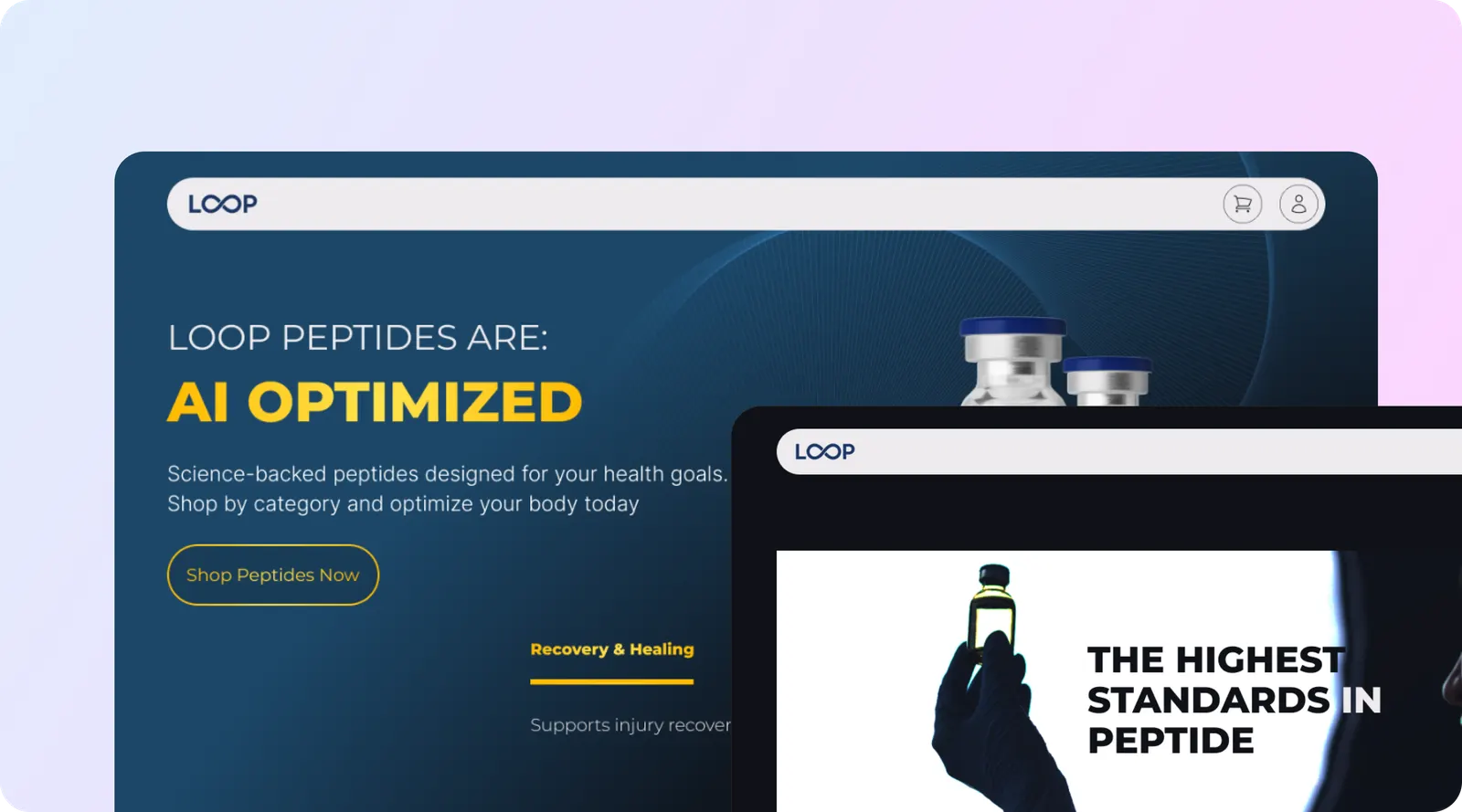
Loop Biolabs. Customers bought once, took the product inconsistently and did not reorder. We built a store where each product comes with a guided programme: intake, dosage and timing, light progress logging and reorder timing from real consumption. Result: repeat purchase rate from 23% to 61% for enrolled customers, lifetime value up 2.8x, and dosage and timing support questions down 62%.
How fast should a business website be?
Fast enough to pass Google’s Core Web Vitals on real users’ phones. Google’s guidance gives three thresholds, and a page passes when it meets all three at the 75th percentile of page loads, measured separately for mobile and desktop.
| Metric | Measures | Good | What usually breaks it | What we do |
|---|---|---|---|---|
| Largest Contentful Paint (LCP) | Loading: when the main content appears | Within 2.5 seconds | Large hero images, slow hosting, render-blocking scripts | Sized and compressed images, static or cached pages, fonts loaded early |
| Interaction to Next Paint (INP) | Responsiveness to taps and clicks | Under 200 milliseconds | Heavy JavaScript, chat and tracking scripts, page builders | Little or no client-side JavaScript on content pages; third-party scripts deferred |
| Cumulative Layout Shift (CLS) | Visual stability | Under 0.1 | Images without dimensions, late banners, web fonts swapping | Width and height on every image, reserved space for embeds and banners |
Sources: web.dev, Web Vitals and Google Search Central, Core Web Vitals (page last updated Dec 10, 2025), both checked Oct 31, 2026. INP became a stable Core Web Vital in 2024, replacing First Input Delay.
Google does not call Core Web Vitals a ranking factor on their own. Its documentation says they are part of page experience, which “aligns with what our core ranking systems seek to reward,” and that it highly recommends good scores for success with Search. The practical reason is simpler: a phone visitor who waits for a hero image or taps a button that does not respond does not fill in your form.
How does a website turn visitors into leads in your CRM?
Most websites do not lose leads on the page. They lose them after the form: an email to a shared inbox, read the next day, by whoever has time. We build the path from form to sales pipeline as part of the site.
| Step | What we build | Why it matters |
|---|---|---|
| Qualify | Two to four questions sales actually needs (client type, size, timeline), routed by answer | ITS’s enquiry flow routes by client type so the right person replies |
| Capture source | UTM campaign, landing page and referrer saved with each submission | You see which pages and campaigns produce inquiries as well as visits |
| Send to the CRM | Contact created or updated, deal in the right pipeline stage | No retyping; duplicate contacts matched on email |
| Reply instantly | Automatic email or SMS with a booking link | The visitor gets an answer while they are still interested |
| Assign | Owner set by rule, task created, alert sent | Someone is accountable for every enquiry |
We connect lead capture to GoHighLevel, HubSpot, monday.com and Pipedrive. If the CRM itself is not set up yet, or the pipeline needs rebuilding, our CRM setup services handle that alongside the site, and CRM integration services cover connections to other tools.
How does a website build work, week by week?
Our website builds ran 5 to 8 weeks. A typical 6-week business website:
| Week | Stage | What happens |
|---|---|---|
| 1 | Discovery | Who the site is for, what they need to see first, the enquiry questions, the CRM, the old site’s pages and rankings to protect |
| 1 to 2 | Structure and copy | Sitemap, page outlines, headings matched to real search phrasing, copy drafts or edits |
| 2 to 3 | Design | Mobile and desktop designs for each template, approved before build |
| 3 to 5 | Development | Templates, CMS, forms and CRM connection, schema, redirects from old URLs, analytics |
| 5 to 6 | QA | Core Web Vitals lab checks, forms tested end to end into the CRM, accessibility and browser checks |
| 6 | Launch | DNS cut-over, sitemap submitted in Search Console, redirects verified, first enquiries watched |
| After | Support | Real-user Core Web Vitals, fixes, new pages, changes to forms and routing |
Commerce sites and sites with custom tools (a product configurator, a storefront builder) take longer: Cyrano Brands and Drop My Drip ran 8 weeks. The most common delay is content, so we agree who writes what in week 1.
What does website development cost?
Cost follows the number of distinct page templates, the custom features, the content work and the integrations, not the number of pages.
| Cost driver | Lower effort | Higher effort |
|---|---|---|
| Templates | Home, service, about, contact, blog | Many layouts, case study and resource templates, gated content |
| Content | You supply final copy and photos | We structure and write copy (as on ITS) |
| Features | Contact form | Configurators, storefronts, calculators, member areas |
| Integrations | One CRM form | CRM plus booking, payments, product feeds, internal systems |
| Migration | New domain, no history | Existing site with rankings: redirects for every URL that has traffic or links |
| Languages and regions | One | Several, with hreflang and local content |
Our approach. Websites are quoted on scope, project-based or hourly. We scope yours on a free 30-minute call and send a written quote with a launch week. Hosting, domain, CMS licences and CRM subscriptions are separate running costs, and the quote lists them.
WordPress, Webflow or a custom build?
| Option | Best for | Watch out for |
|---|---|---|
| Website builder (Wix, Squarespace) | Simple brochure sites you edit yourself | Limited form logic and integrations; speed depends on the platform |
| WordPress | Content-heavy sites, many editors, plugin ecosystem | Plugin bloat slows pages and adds security updates; needs maintenance |
| Webflow | Marketing teams who want visual editing and fast changes | Plan limits and pricing per site; custom logic needs outside code |
| Custom static or headless build (for example Astro with a CMS) | Speed, security, custom integrations and CRM routing | Edits go through the CMS you choose; needs a team for new templates |
| Verdict | Pick by who edits the site and what it must connect to. When enquiries and Core Web Vitals matter most, a static or headless build with a simple CMS is our default; this site is a static site. |
Who do we build websites for?
- B2B companies selling complex services whose site does not show what they know. ITS is the pattern: specific scenarios, named systems, case studies a procurement team can forward.
- Brands selling online that need more than a theme: product configuration, previews, programmes or creator storefronts, as with Drop My Drip, Loop Biolabs and Cyrano Brands.
- Service businesses whose leads go missing between the form and the sales team, and who want the site and the CRM built together.
- Startups that need a launch site now and a web app or customer portal behind it later, from the same team.
How to choose a website development company
- Live sites with results. Ask what changed after launch: enquiries, sales, time on site, return rates. Screenshots of designs are not enough.
- A speed plan. They should name the Core Web Vitals thresholds and how they will meet them on mobile; a lab score on a fast laptop is not enough.
- Content ownership. Who structures and writes the copy, and by when. Most delays start here.
- The path to your CRM. How a form submission becomes a contact, a deal stage, a reply and a task.
- Migration care. A redirect for every old URL with traffic or links, so rankings survive the move.
- You own it. Code in your repository; domain, hosting and analytics in your name.
- A fixed scope and launch week, and a clear price for support after launch.
Why aibrevo as your website development company?
Our in-house team of 16 engineers in San Francisco, led by co-founder and CTO Shivam Pujara, with 30+ remote specialists, has delivered 200+ software projects, from Spirit Airlines’ group booking system to the commerce sites above. Because we are also a CRM company working only on GoHighLevel, HubSpot, monday.com and Pipedrive, the site and the pipeline it feeds are built by people who do both, so enquiries do not stop at an inbox. After launch, our software maintenance and support service keeps the site fast and the forms working.
We build websites for clients across the US remotely from San Francisco; see app and web development by state and city.
Planning a new website or a rebuild? Book a free 30-minute call or send a message with your current site, who it is for, and the CRM you use. We come back with the page structure we would build, how enquiries will reach your pipeline, a written quote and a launch week.
Sources
All pages opened on Oct 31, 2026.
- web.dev, Web Vitals: LCP, INP and CLS thresholds, 75th percentile rule, INP stable in 2024.
- Google Search Central, Understanding Core Web Vitals and Google search results (last updated Dec 10, 2025): thresholds and relation to ranking systems.
- aibrevo case studies: Internet Travel Solutions, Cyrano Brands, Drop My Drip, Loop Biolabs.