
Software development
Web App Development Company: Custom Web Applications Built by Our In-House Engineering Team
Written scope and quote after the call. NDA on request. You own the code.
Quick answer
We are a web app development company in San Francisco: our 16-person in-house engineering team designs, builds and supports custom web applications such as booking platforms, marketplaces, deal CRMs and transaction portals. Our recent builds went live in 5 to 10 weeks, including Spirit Airlines' group booking system, which cut a 3-day group quote to 40 minutes. This page covers what we build, real results, the process, what drives cost, and how to choose a web app partner.
Builds like this
Part of the guide: Software development
Key takeaways
- Our recent web app builds went live in 5 to 10 weeks: Jetstarix in 5, Coo and Edge Case Capital in 6, Infuse CTL in 7, Miami Open in 8, Miami Dolphins and Homer in 9, Spirit Airlines in 10.
- Spirit Airlines' group booking web app cut the average quote for parties of 20 or more from 3 days to 40 minutes and grew group bookings from 140 to 610 a month within two quarters.
- Our app and web app builds typically cost $7,000 to around $25,000 to $30,000, depending on features, project-based or hourly, with a written quote after a free 30-minute call.
- A web app is software people log in to and work in (accounts, data, transactions); a website mostly publishes content. A progressive web app adds install, offline use and push, and iOS has supported web push for Home Screen web apps since iOS 16.4.
- Every build is done by our 16-person in-house engineering team in San Francisco, led by co-founder and CTO Shivam Pujara, with 200+ software projects delivered.
We are a web app development company: our in-house engineering team in San Francisco builds custom web applications that people log in to and run part of their business on, such as booking and payment platforms, marketplaces, deal-tracking CRMs, transaction portals and admin dashboards. It suits startups shipping a first product, growing companies replacing spreadsheets and email threads, and enterprises that need one workflow built properly. We deliver the full build: scoping, UX and UI design, front end, back end, integrations, QA, launch and support, with the code in your repository. Our group booking web app for Spirit Airlines cut the average quote for parties of 20 or more from 3 days to 40 minutes, and our recent builds went live in 5 to 10 weeks.
From our Spirit Airlines, Miami Dolphins and Homer case studies; timeframes from each build’s case study.
What web application development services do we offer?
We build the whole application, the screens and everything behind them. Most projects combine several of these:
| What we build | What it includes | Example from our work |
|---|---|---|
| Booking and checkout platforms | Live inventory, configurable packages, pricing rules, payments, contracts and e-signature | Miami Dolphins and Miami Open premium suites |
| Quote and approval workflows | Request forms, rules-based pricing, multi-step approvals, deposits and reminders | Spirit Airlines group booking |
| Marketplaces | Two-sided accounts, listings, search by location, redemption or booking, merchant dashboards | Coo local deals, Infuse CTL |
| Transaction and workflow portals | Shared timelines, document requests, role-based permissions, status for every party | Homer home-buying platform |
| Internal tools and custom CRMs | Pipelines, email sync, scoring, reporting, Slack alerts | Edge Case Capital deal CRM |
| Progressive web apps | Installable app, offline screens, web push, one codebase for desktop and mobile | Added where users need install or offline use |
| Integrations | Payment providers, airline and booking systems, email, calendars, and CRMs (GoHighLevel, HubSpot, monday.com, Pipedrive) | Sabre and Stripe at Spirit Airlines |
| Admin dashboards and reporting | Operator views, KPIs, exports, audit logs | Spirit’s group desk dashboard |
Each build ships with role-based access, automated tests on the critical flows, error monitoring, a deploy pipeline and handoff documentation.
Case studies: web apps we have built
Spirit Airlines: group booking for parties of 20 or more
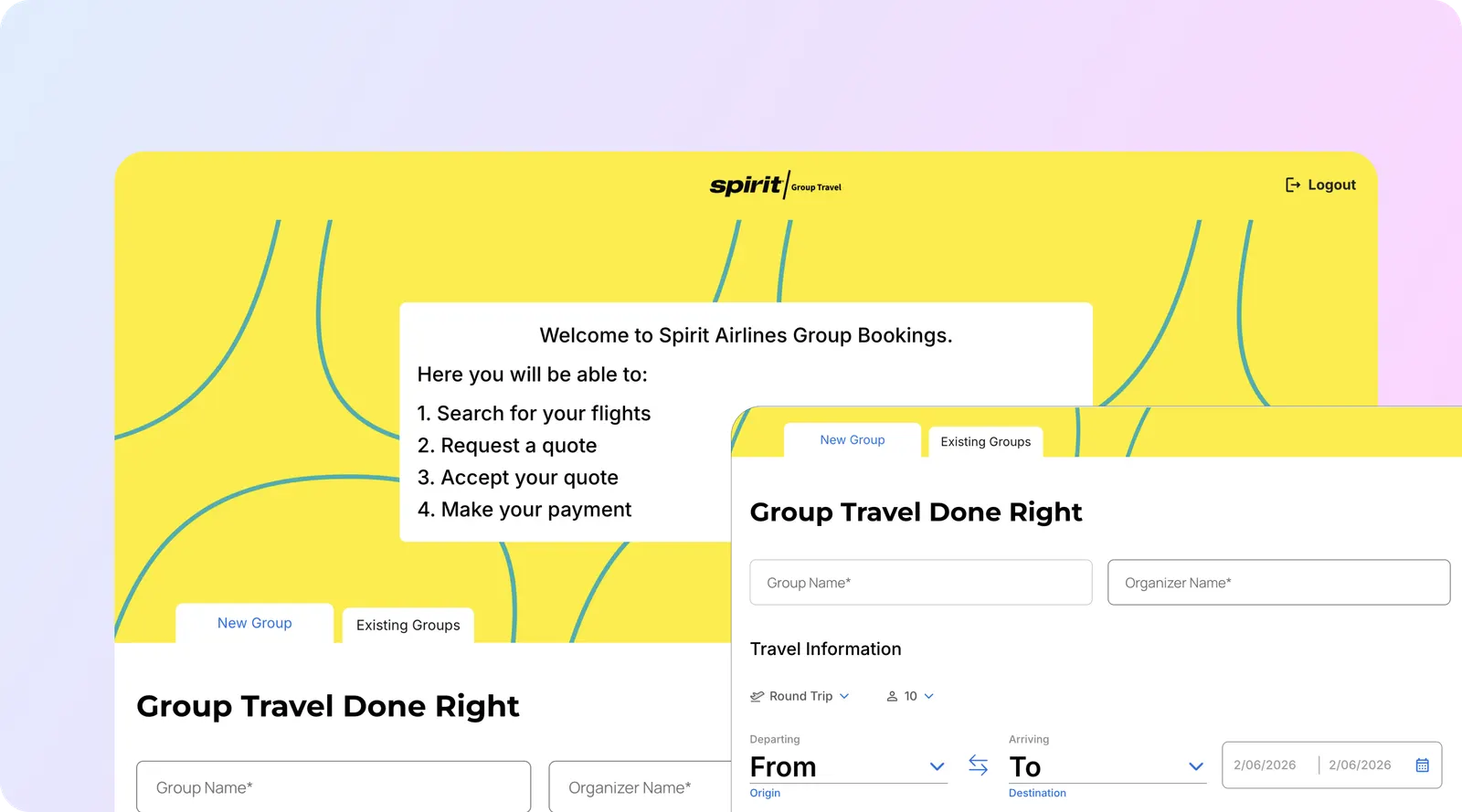
Group bookings ran on manual fare lookups and email. We built a public quote request with CSV manifest upload, a rules-based pricing engine that checks live fare inventory through Sabre, a discount-based approval chain and deposit-and-balance payments through Stripe. The average group quote went from 3 days to 40 minutes, group bookings grew from 140 to 610 a month within two quarters, and the system went live in 10 weeks, ahead of the spring break booking window.
Miami Dolphins and Miami Open: premium suite sales
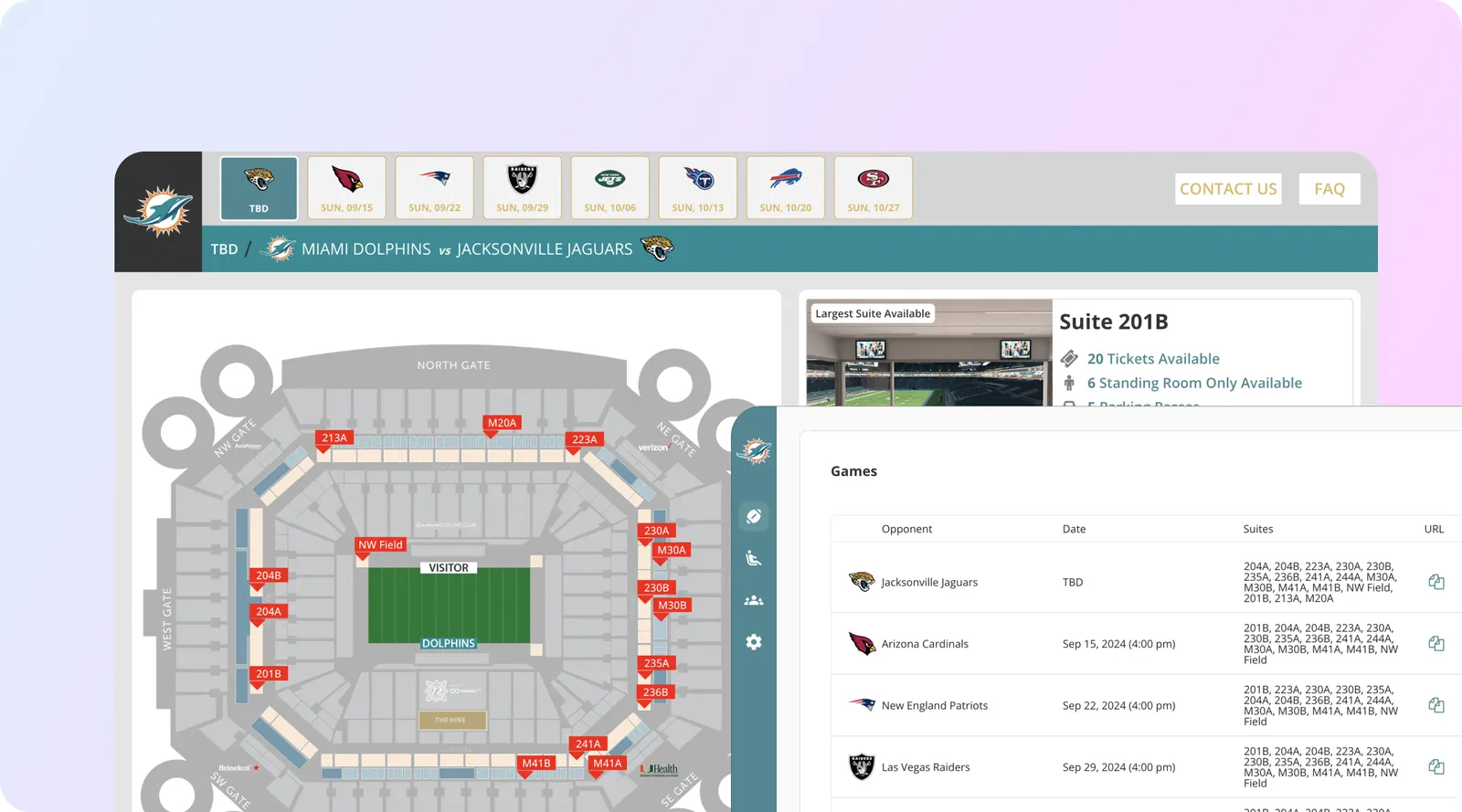
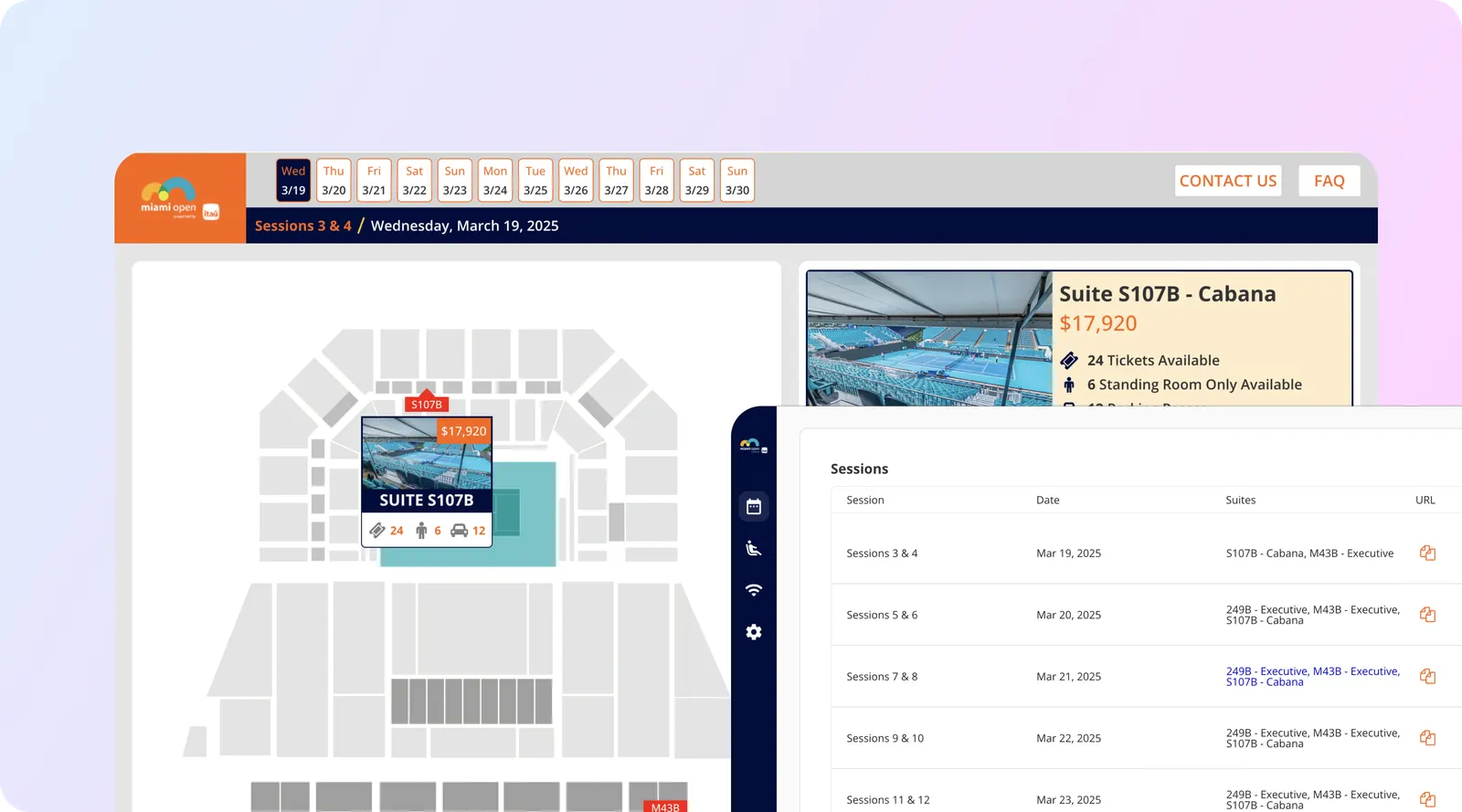
For the Miami Dolphins we built an interactive suite map with live inventory, configurable season and single-game packages, and self-serve checkout through contract and e-signature. Enquiry to signed contract fell from 21 days to 6, 41% of suite sales now close without a sales call, and single-game suite revenue rose 2.4x (built in 9 weeks). The Miami Open version sells session-level hospitality across 14 days: booking completion rose from 19% on the old enquiry form to 68%, and packages sold out 5 weeks earlier than the previous tournament (built in 8 weeks).
Homer: one timeline for every home purchase
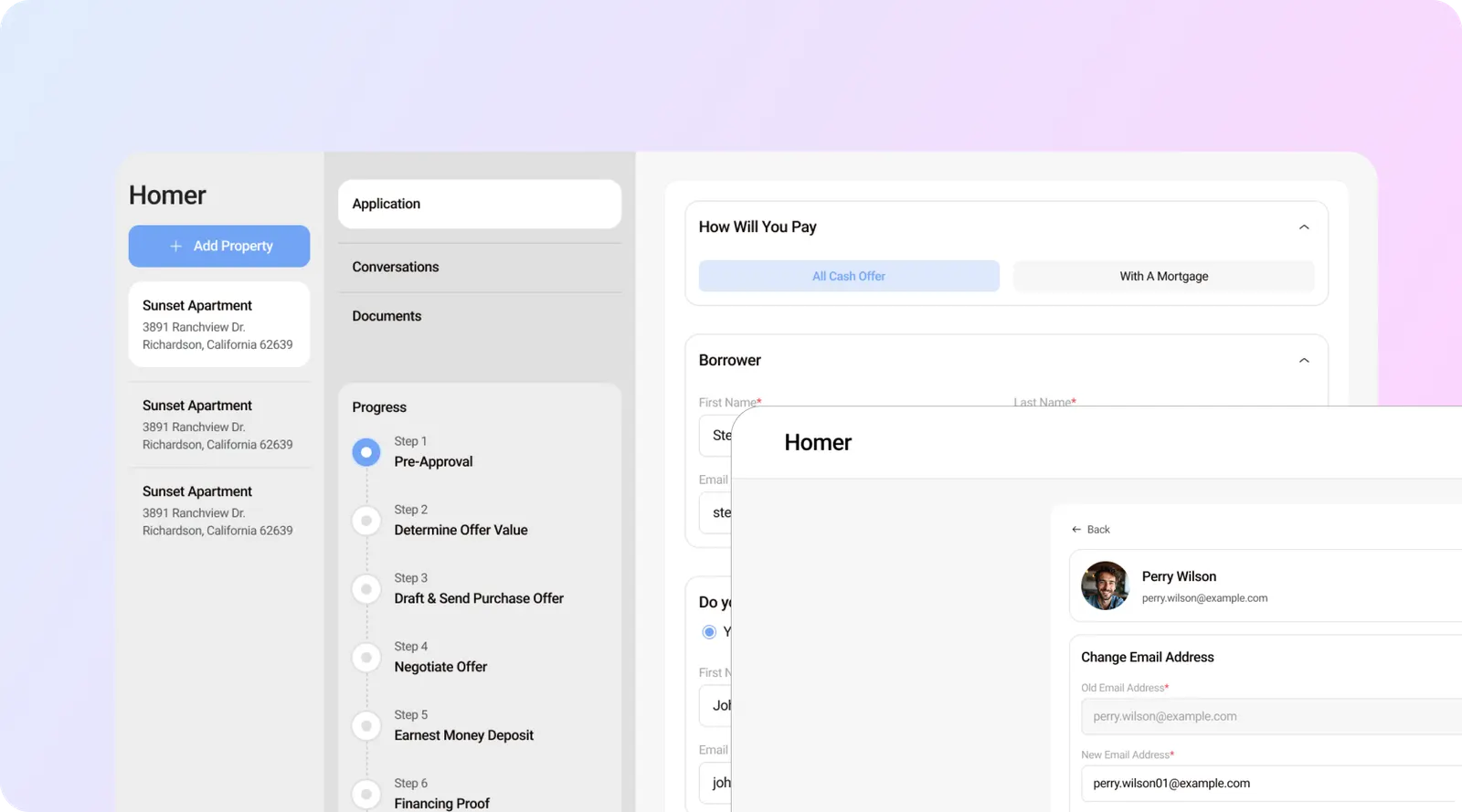
Homer needed buyers, agents, lenders and inspectors working from one record instead of six email threads. We built a shared transaction timeline with milestone owners, document requests that escalate, lender and inspection tracking, and per-party permissions. Average time to close dropped from 43 to 32 days, the fall-through rate fell from 19% to 8%, and 4,200 transactions ran through it in the first year (built in 9 weeks).
Coo and Edge Case Capital: a marketplace and an internal CRM in 6 weeks each

Coo is a local deals marketplace: merchants publish a deal in about three minutes and customers find offers by proximity. In year one it listed 2,100 local businesses across four cities and 310,000 deals were redeemed, 68% by first-time customers. Edge Case Capital is a venture fund’s deal CRM with email sync, a partner scoring rubric and a memo generator: investment committee memos now take 90 minutes instead of six hours, and three offices moved onto one pipeline from five tracking systems.
How long does custom web application development take?
Our recent web apps went live in 5 to 10 weeks. Scope sets the number: how many user roles, how many outside systems, and whether payments or regulated data are involved.
| Build | Type | Weeks to launch |
|---|---|---|
| Jetstarix | Quote request front end and fleet catalogue | 5 |
| Coo | Two-sided local deals marketplace | 6 |
| Edge Case Capital | Internal deal CRM with email sync | 6 |
| Infuse CTL | Healthcare services marketplace with route-aware scheduling | 7 |
| Miami Open | Session-level hospitality booking | 8 |
| Miami Dolphins | Suite booking with contracts and CRM pipeline | 9 |
| Homer | Multi-party transaction platform | 9 |
| Spirit Airlines | Group booking with Sabre and Stripe integrations | 10 |
From each build’s case study on our work page.
Across all 28 web app builds in our timeline study of 44 builds, the median time to a first launched version was 7 weeks. The builds that ran 9 or 10 weeks connected to live inventory or several outside parties.
How does our web app development process work?
- Discovery (week 1). We map users, roles, the one workflow that matters most, data ownership and the outside systems involved, and agree the scope in writing.
- UX and UI design (weeks 1 to 2, overlapping). Clickable screens for the main flows, tested with real users or the client team before code.
- Architecture and setup (week 2). Data model, stack, hosting, environments, authentication and the deploy pipeline.
- Development in short cycles (weeks 2 to 8). Working software every week or two on a staging link, so you review real screens, not status reports.
- QA and hardening (last 1 to 2 weeks). Automated tests on the money paths (sign-up, booking, payment, approval), cross-browser and mobile checks, load and security checks, and fixes.
- Launch. Data migration if needed, monitoring and alerts on, and a staged rollout where the risk justifies it.
- Support. Maintenance, monitoring and a backlog of the next features, or a full handoff to your team.
What is included in a web app development build?
Every web app build includes the scope, design, code, testing and launch work to put a working product in front of your users, plus a handover that lets any team run it. Specifically:
- A written scope with user roles, the core workflow, integrations and milestones, agreed before code starts.
- UX and UI design of the main flows as clickable screens, approved before development.
- The web application itself: front end, back end, database, authentication and an admin area for your team.
- Integrations named in the scope, such as payments, a CRM, a booking system or an internal API.
- A staging link updated every week or two so you review working software during the build.
- Testing: automated tests on the money paths plus cross-browser, mobile, security and load checks.
- Launch: production setup, data migration where needed, and monitoring and alerts switched on.
- Handover: the code in your repository, a recorded video walkthrough and written documentation.
Not included: third-party subscription and licence fees (for example Stripe, Twilio, a map API or a CRM plan) and hosting bills, which you pay to those vendors directly. Support after launch is billed per hour.
How much does web app development cost?
Our price. Our app and web app builds typically cost $7,000 to around $25,000 to $30,000, depending on features. A focused first version sits near the low end; many features, user roles, payments and integrations land near the top. We work project-based or hourly. After a free 30-minute call we send a written scope and quote, and you own the code at handover. Full details are on our pricing page. For a first range before the call, estimate your build in two minutes.
What moves the cost of your web app:
| Cost driver | Lower end | Higher end |
|---|---|---|
| User roles | One user type plus an admin | Several parties with different permissions (buyer, agent, lender) |
| Integrations | None, or one well-documented API | Booking systems, ERPs, legacy APIs, two-way CRM sync |
| Payments | Simple checkout | Deposits, balances, refunds, contracts, invoicing |
| Data and compliance | Public or low-risk data | Health, financial or personal data needing audit logs and stricter controls |
| Design | Clean standard components | Custom visual design, interactive maps, 3D or media-heavy pages |
| Platforms | Responsive web | Web plus PWA install and offline, or plus native mobile apps |
| Content and migration | Fresh start | Years of records to clean and import |
Each web app is scoped and quoted in writing after a free 30-minute call, for an agreed scope with milestones. The usual way to keep cost down is to launch the one workflow that pays for the app first (Spirit’s group quote, Coo’s deal publishing) and phase the rest.
Web app vs website vs mobile app: which do you need?
| Website | Web app | Progressive web app | Native mobile app | |
|---|---|---|---|---|
| Main job | Publish information | Let users sign in and do work | A web app that installs and works offline | Deep device features and app store presence |
| Accounts and data | Rarely | Yes | Yes | Yes |
| Runs on | Any browser | Any browser | Any browser, installable | iOS or Android (or both via cross-platform) |
| Offline use | No | Limited | Yes, with a service worker | Yes |
| Push notifications | No | Browser push on desktop and Android | Yes; on iOS and iPadOS 16.4+ when added to the Home Screen | Yes |
| App store review | No | No | No | Yes |
| Typical fit | Marketing site, content | Booking, portals, dashboards, SaaS | Field teams, repeat-use customer apps | Camera, background location, heavy daily use |
| Verdict | Use for content | Default for business software | Add when install or offline matters | Add when the device is the product |
Sources: MDN Web Docs, Progressive web apps, and WebKit, Web Push for Web Apps on iOS and iPadOS (Feb 16, 2023), both checked Oct 31, 2026.
MDN describes a progressive web app as one that runs on multiple platforms from a single codebase, can be installed, can operate while offline and in the background, and can integrate with the device. That is why we often recommend progressive web app development before a native app: one codebase, no store review, and an upgrade path to native later. If your product needs a store listing from day one, see our mobile app development service.
Who do we build web apps for?
- Startups and founders who need a first version in weeks, not quarters. See our MVP development and SaaS development services.
- Growing companies running a key workflow on spreadsheets, email and a booking form, such as Edge Case Capital’s deal tracking before EdgeBase.
- Enterprise teams that need one process built well and connected to existing systems, such as Spirit Airlines’ group desk.
Industries with matching builds: airlines and charter aviation (Spirit Airlines, Jetstarix), sports and events (Miami Dolphins, Miami Open), real estate (Homer), healthcare services (Infuse CTL), finance (Edge Case Capital) and local commerce (Coo).
How to choose a web app development company
A short checklist, and how we answer each point:
- Can they show live builds with numbers? Ask for case studies with before and after results, not mockups. Ours are on our work page.
- Who writes the code? Ask whether the team is in-house or subcontracted. Ours is a 16-person in-house engineering team, with 30+ remote specialists for specific skills.
- Is the scope written and fixed? You should get a written scope, milestones and a price before work starts.
- How will you see progress? Expect a staging link and working software every week or two.
- How do they test? Ask which flows have automated tests and how releases are checked.
- Who owns the code and accounts? The repository, domain, hosting and third-party accounts should be in your name.
- What happens after launch? Ask for the support terms in writing, and how a handoff to another team would work.
- Can it connect to your CRM? If sales or service live in a CRM, the app should feed it, not create a second database nobody checks.
Why aibrevo for web app development?
- In-house engineers. A 16-person engineering team in San Francisco led by co-founder and CTO Shivam Pujara, plus 30+ specialists who work with us remotely.
- 200+ software projects delivered by our engineering team, including Spirit Airlines, the Miami Dolphins, the Miami Open, Homer and Edge Case Capital.
- Launch in weeks. The eight builds on this page went live in 5 to 10 weeks each.
- CRM integration built in. We also set up and integrate GoHighLevel, HubSpot, monday.com and Pipedrive, so your web app and your CRM share one set of data. See CRM integration services.
- You own everything. Code in your repository, a video walkthrough and written documentation at handover, and hourly support after launch through our software maintenance and support service.
We build web apps for clients across the US remotely from San Francisco; see app development by state and city.
Planning a web app? Book a free 30-minute call or send a message with who will use it, the one workflow it must handle, and the systems it has to connect to. We come back with a recommended scope, the stack we would use, a timeline and a written quote.
Sources
All pages opened on Oct 31, 2026.
- MDN Web Docs, Progressive web apps.
- WebKit, Web Push for Web Apps on iOS and iPadOS, Feb 16, 2023.
- aibrevo case studies: Spirit Airlines, Miami Dolphins, Miami Open, Homer, Coo, Edge Case Capital.