Real estate · Home buying transaction platform
Homer: one shared timeline for every party in a home purchase
Homer guides home purchases from offer to closing. We built a transaction platform that puts agents, lenders, inspectors and buyers on one shared timeline with milestones, document requests and early finance checks. Average time to close fell from 43 to 32 days and the fall-through rate dropped from 19% to 8%, across 4,200 transactions in year one. We built it in 9 weeks.
- Client
- Homer
- Industry
- Real estate
- Built
- Web app
- Timeframe
- 9 weeks
What changed
- 43 to 32 daysAverage time to close, 11 days faster.
- 71% less chasingDrop in document chasing, measured in agent hours per transaction.
- 4,200 transactionsCompleted through the platform in the first year.
- 19% to 8% fall-throughMost of the gain came from verifying finance earlier.
- 1 shared timelineEvery party in one place, replacing an average of six separate email threads per deal.
- 9 weeksTime to build.
Results as reported for this build after launch.
The challenge
Buyers and sellers had to work through separate services for financing, inspections and closing. Nothing was connected, so deals stalled, messages got lost and every transaction took more effort than it should.
Buying a home involves an agent, a lender, an inspector, an appraiser, a title company, a solicitor and two nervous households, with no single source of truth between them. Each party has its own system, none of those systems connect, and email holds the whole thing together.
Our client had handled enough transactions to know that delays rarely come from the work itself. They come from waiting: for a document nobody knew was required, for a party who was never told they were now holding things up, for a status update that takes three phone calls to piece together.
To buyers, all of that felt like silence. Their most common complaint was not that the process was slow but that nobody could tell them what was happening or what they were waiting for.
What we built
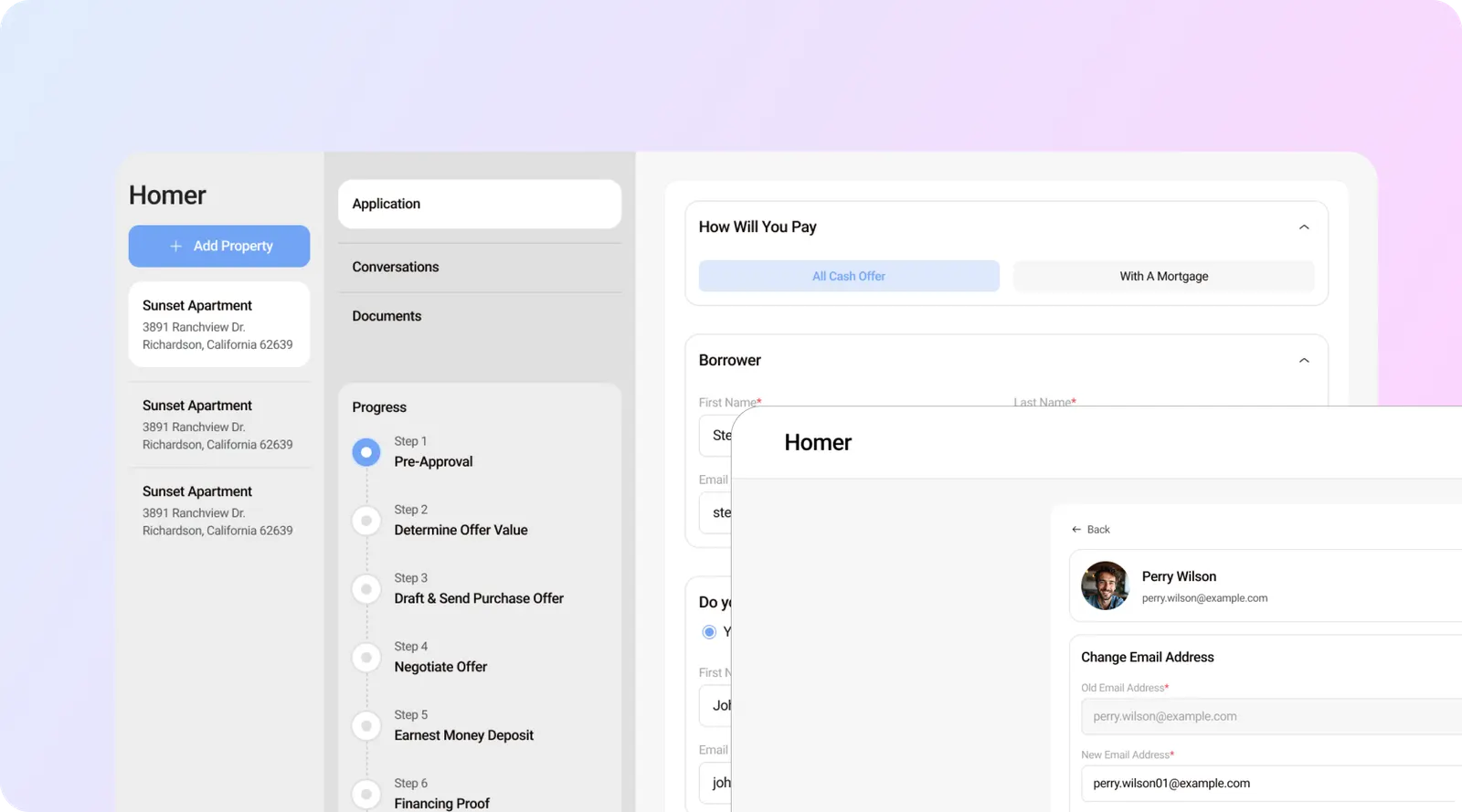
We built a guided transaction platform that turns the whole purchase into a structured digital journey. Every party sees the same progress, deals close faster and coordination no longer depends on chasing people by email.
Shared transaction timeline
Every party sees one timeline. Each milestone shows its owner, its dependencies and its due date, and whoever is blocking progress is named, which is most of the value.
Milestone-based document requests
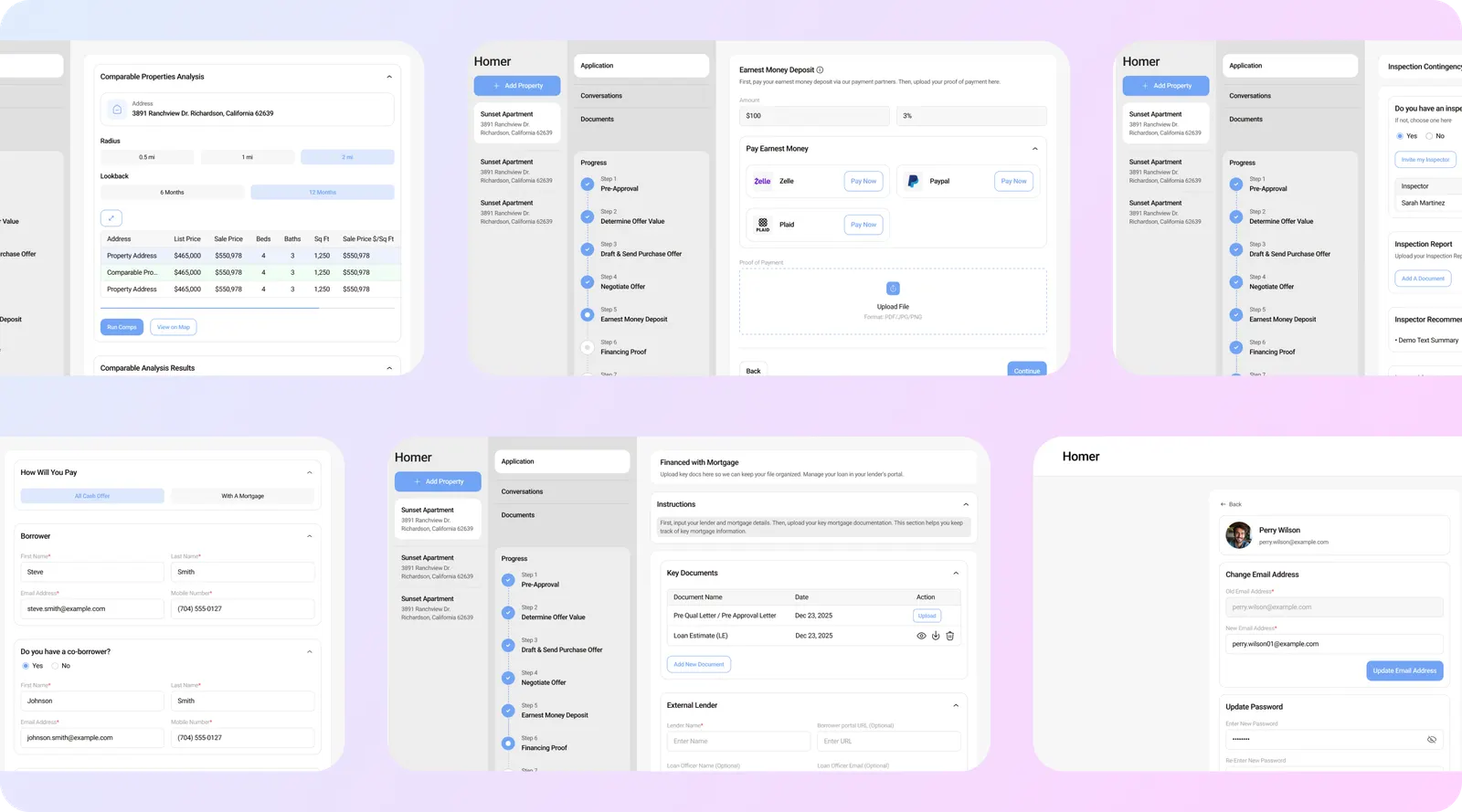
Document requests are tied to milestones, with secure upload, automatic completeness checks and reminders that escalate instead of repeating.
Lender, inspection and appraisal tracking
Lender status, inspection scheduling and appraisal tracking are integrated, so finance is verified early instead of at the point a deal collapses.
Milestone-linked messaging with permissions
Conversations attach to milestones instead of individual inboxes, and permissions control what each party can see.
Closing checklist and plain-language guidance
A closing checklist tracks final conditions, and buyers get a plain-language explanation of each stage as it opens.
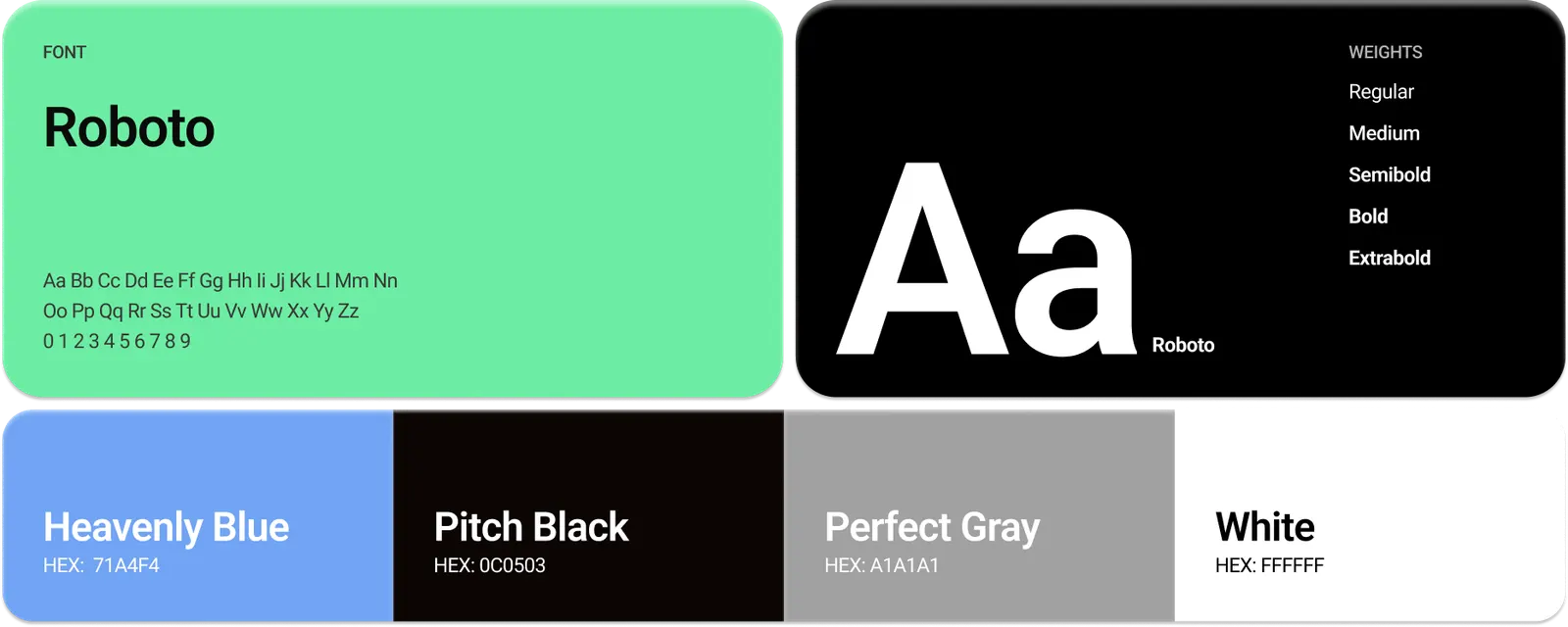
Screens and design system
The result
The drop in fall-through from 19% to 8% is the figure with real money behind it, and it came almost entirely from checking finance earlier, not from anything later in the process.
The change for buyers was harder to measure and drew more comment. Ending the silence mattered as much to satisfaction scores as cutting eleven days from the timeline.