
Software development
AI App Development Company: Generative AI and LLM Apps Built by Our In-House Engineers
Written scope and quote after the call. NDA on request. You own the code.
Quick answer
aibrevo is an AI app development company in San Francisco. Our in-house engineers build generative AI and LLM apps, RAG assistants and AI features inside existing products, on OpenAI, Anthropic or Google models. Our AI builds, including DAIN, Birdie, Eva Social and Ingio, shipped in 7 to 8 weeks each. Every project is scoped and quoted in writing after a free call.
Builds like this

Part of the guide: Software development
Key takeaways
- Our AI builds shipped in 7 to 8 weeks each: DAIN (7), Eva Social (7), Ingio (7), Birdie (8) and HirePrep (8).
- DAIN cut listing video turnaround from three to five days to 8 minutes, and cost per video from $450 to under $12 in compute.
- Our app and web app builds typically cost $7,000 to around $25,000 to $30,000, depending on features, with model running costs estimated separately and a written quote after a free call.
- Model API prices change often: on Oct 31, 2026, mid-tier models from Anthropic, OpenAI and Google list at $2 per million input tokens and $10 per million output tokens, and all three offer batch rates at half price.
- Most AI apps fail on data, evaluation and guardrails rather than on the model. We set up an evaluation set and the OWASP LLM Top 10 checks before launch.
aibrevo is an AI app development company: our in-house engineers in San Francisco build generative AI apps, LLM assistants, RAG search over your own content, and AI features inside products you already run. Clients come to us when they need a working product in weeks, not a demo: DAIN, a realtor video app we built in 7 weeks, now produces a narrated listing video in 8 minutes instead of a three to five day vendor turnaround. Our AI builds have each shipped in 7 to 8 weeks. We work with models from OpenAI, Anthropic and Google, pick by testing on your tasks, and scope every project in writing after a free call.
From our DAIN case study, Ingio case study, Eva Social case study and Birdie case study.
What AI apps do we build?
We build complete products and AI features inside existing ones. The common thread is a model doing a defined job inside software that checks its work.
| What you need | What we deliver | Example from our builds |
|---|---|---|
| Generative AI app | Content generation (text, voice, video) with templates, human edit before publish, and per-item cost control | DAIN listing videos, Eva Social posts |
| LLM assistant or chatbot | Assistants for customers or staff, with role, scope, tone, permitted actions and escalation rules | Ingio assistant hub |
| RAG over your content | Search and answers from your documents, help center or records, with sources shown and freshness tracked | Ingio shared knowledge layer |
| AI data extraction | Turning unstructured input (captions, PDFs, emails, forms) into structured records | Birdie location extraction |
| Adaptive or scoring features | Personalized paths, scoring and feedback driven by a user’s performance | HirePrep mock interviews |
| AI integration | AI features added to your existing web app, mobile app, admin panel or CRM | See CRM AI agents |
| AI agents with tools | A model that can call your APIs (look up an order, create a ticket) within strict limits and approvals | Ingio permitted actions |
Every build includes the parts that are easy to skip: an evaluation set, logging of model inputs and outputs, cost limits per user and per day, and an admin view to review bad answers.
Case studies: AI apps our team has shipped
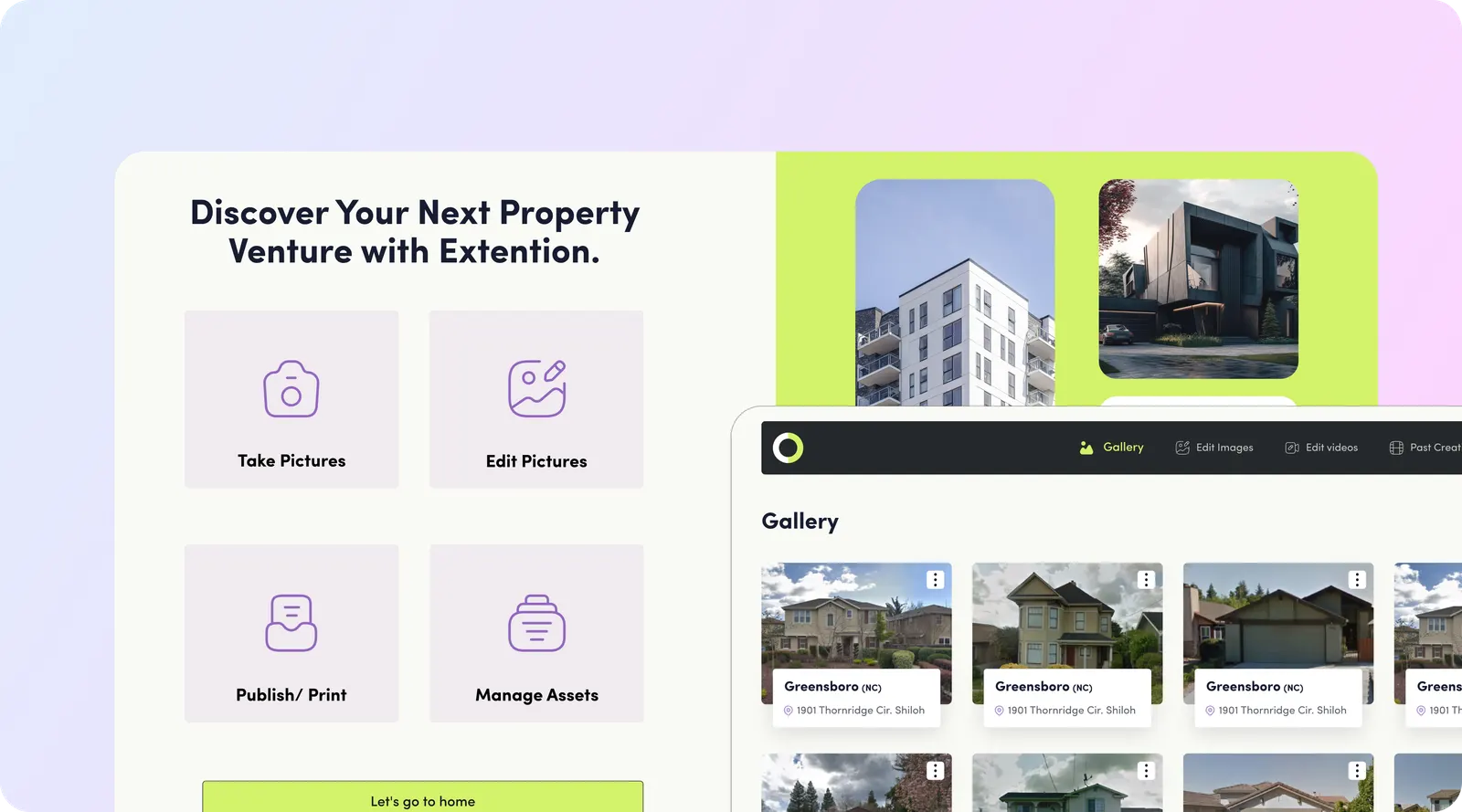
DAIN (real estate, 7 weeks). Agents upload photos or walkthrough footage; the app detects rooms, sequences them in the order a buyer would walk through, generates an editable voiceover script from the listing details, and renders portrait and landscape versions from one job. Cost per video went from $450 with a production vendor to under $12 in compute, and the platform generated 41,000 tours in its first year. Listings with video received 3.2x the enquiries of those without, measured across the same brokerages.
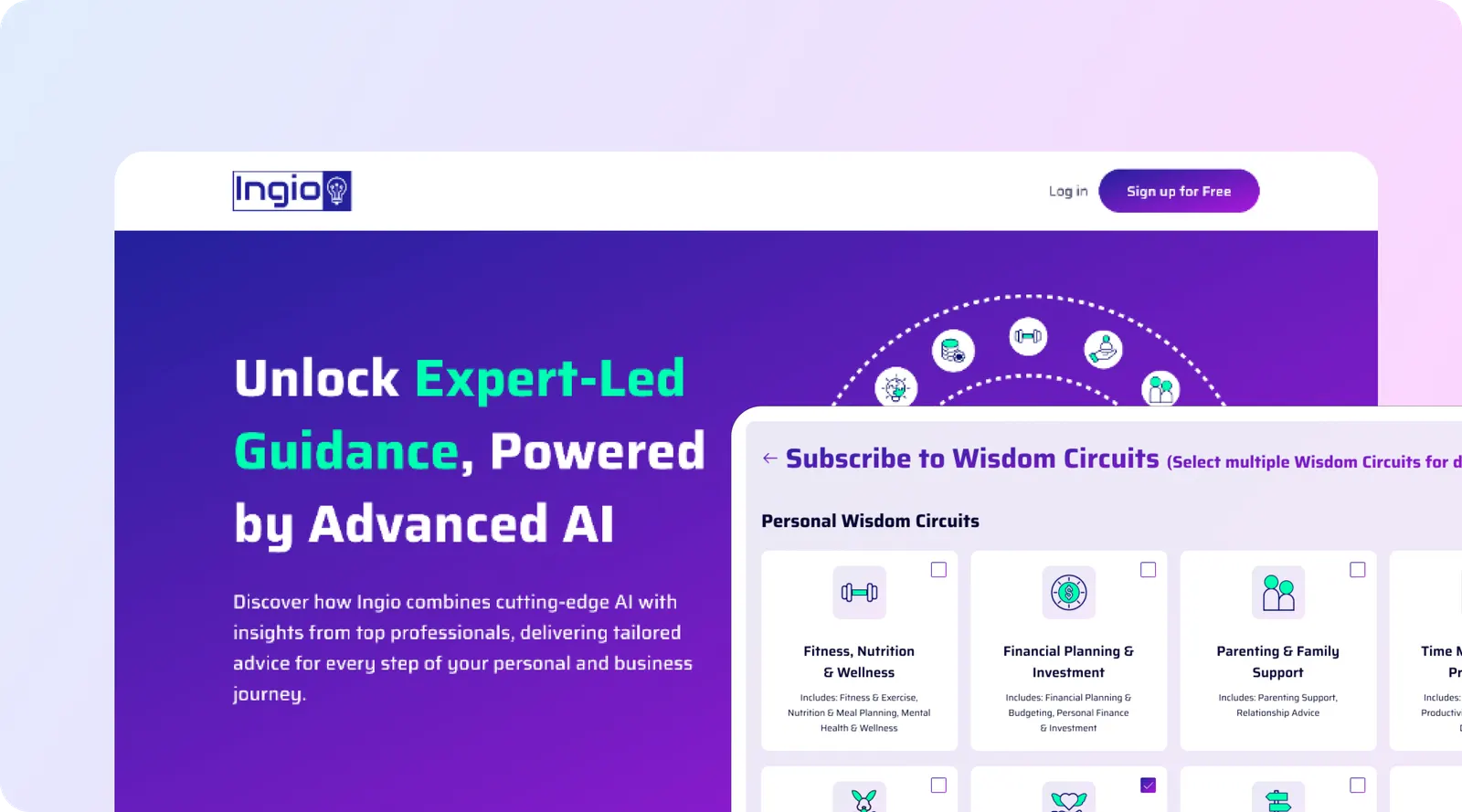
Ingio (SaaS, 7 weeks). A platform where a business configures assistants (role, scope, tone, permitted actions, escalation rules) on top of one shared, versioned knowledge base, and deploys them to a web widget, Slack, email or API. Deployment dropped to 20 minutes, accounts run 11 assistants on average, and customer-facing assistants deflect 43% of support tickets. The unanswered-questions report became the feature clients value most, because it shows where their documentation is missing.
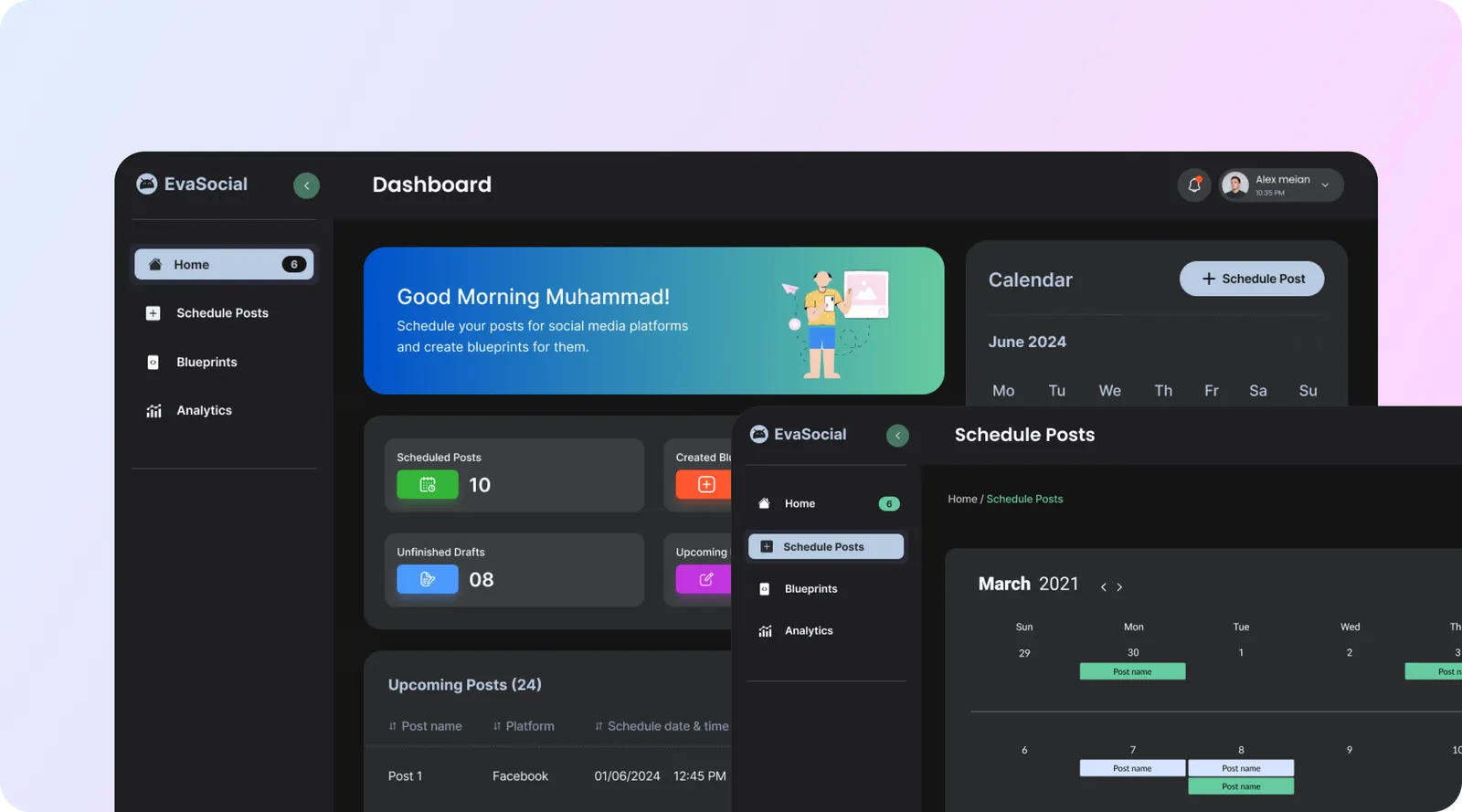
Eva Social (marketing, 7 weeks). One brief becomes platform-native drafts for each channel a team runs, with a content calendar that warns about thin weeks and an idea bank that fills slots before the week starts. Weekly production fell from 6 hours to 90 minutes, posting consistency rose from 44% to 91% of planned slots, and 12,000 teams and creators used it within a year.
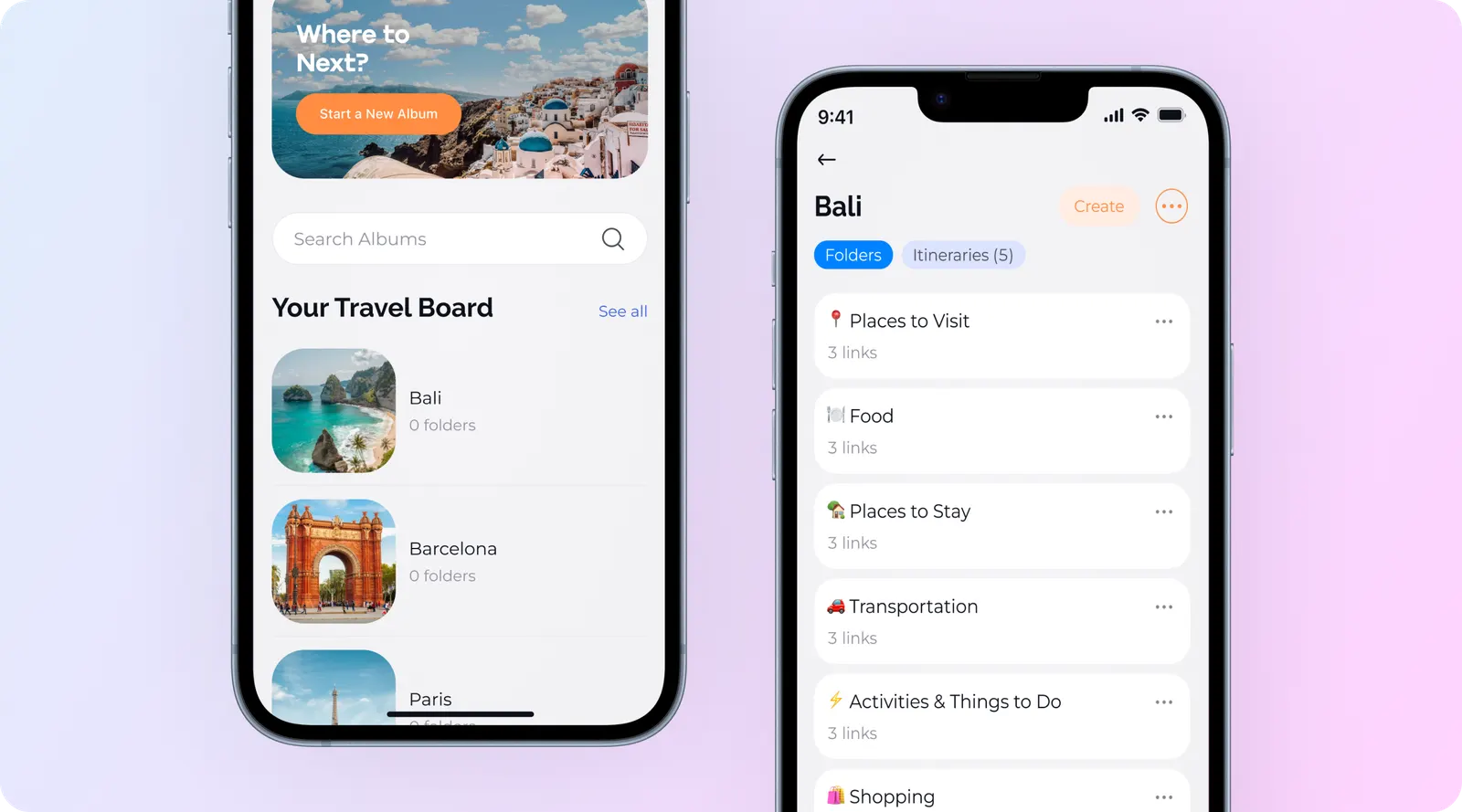
Birdie (travel, 8 weeks). Users import saved Instagram, TikTok and Pinterest posts. The hard part of the build was location extraction: reading geotags, captions, on-screen text and comments to work out which place a short video is about, then sequencing places against opening hours and travel time. A first draft itinerary takes 40 seconds, and users created 88,000 itineraries in the first year.
HirePrep (education, 8 weeks). An adaptive training platform for investment banking candidates: a diagnostic sets the baseline, the learning path drops topics a candidate already knows, and timed mock interviews branch on the answer given and score technical accuracy separately from delivery. Candidates cut study time by 40% while average technical accuracy rose from 54% to 88%. Read the HirePrep case study.
How long does an AI app take to build?
Our five AI builds took 7 to 8 weeks each. That is the range for a focused first version with one core AI workflow, an admin side and the integrations it needs.
| Build | Industry | AI job in the product | Weeks |
|---|---|---|---|
| DAIN | Real estate | Generate narrated video from photos and listing data | 7 |
| Eva Social | Marketing | Adapt one brief into platform-native posts | 7 |
| Ingio | SaaS | Configurable assistants over a shared knowledge base | 7 |
| Birdie | Travel | Extract places from social posts, build itineraries | 8 |
| HirePrep | Education | Adaptive learning path and scored mock interviews | 8 |
From our case studies. Across the six builds with an AI feature at the core in our app development timeline research, the median was 7.5 weeks and none took fewer than 7, because model output needs testing on real inputs before launch.
What adds weeks to your AI app: more integrations (CRM, billing, help desk, internal systems), more user roles with different permissions, live data the model must read at the moment of a request, voice, image or video output, and compliance work for regulated data. On the free call we tell you which apply and put a week-by-week plan in the written quote.
How the build works
- Discovery (week 1). We write down the one job the AI must do, what a good output looks like, what a bad one costs you, and where the data comes from. We also check whether the feature needs AI at all.
- Evaluation set (week 1 to 2). We collect 50 to 200 real examples with known good answers. This set decides the model, catches regressions, and is the only honest way to say the app works.
- Design (week 1 to 3). Screens for the user and the admin, including the human review step: where a person edits, approves or rejects what the model produced.
- Build (week 2 to 7). The app, the model calls behind a single internal interface (so the model can be swapped), retrieval if needed, structured outputs validated in code, usage limits and logging.
- QA and red-teaming (last 1 to 2 weeks). The evaluation set on every change, plus tests for prompt injection, data leaks and runaway usage from the OWASP list below.
- Launch and handover. Monitoring of quality, cost per task and error rates switched on, a review queue for flagged answers, and a handover with a recorded video walkthrough, written documentation, and the code, prompts, evaluation set and API accounts in your name.
- Support. Model upgrades, evaluation re-runs and fixes after launch, billed per hour under maintenance and support.
These are planning ranges drawn from our 7 to 8 week builds, not a promise; the written quote states the timeline for your scope.
What is included in an AI app build?
You get a working AI product and everything you need to run and change it after we hand it over:
- A free 30-minute call, then a written scope and quote, including an estimate of monthly model costs at your volume
- A written definition of the AI’s job and what good output looks like
- An evaluation set of real examples with known good answers, used to pick the model and catch regressions
- UX and UI design for the user and admin sides, including the human review step, approved before code is written
- The app (web, mobile or inside your existing product), with model calls behind one interface so the model can be swapped
- Retrieval over your content when the answers depend on your documents or records
- Guardrails: structured outputs validated in code, usage caps per user and per day, logging, and checks against the OWASP LLM Top 10
- Integrations with your CRM (GoHighLevel, HubSpot, monday.com or Pipedrive) and other systems, when the scope includes them
- A working demo every week
- Handover: a recorded video walkthrough, written documentation on how to use it and how it was built, and the code, prompts, evaluation data and accounts in your name
Not included: model API usage, hosting and other third-party subscriptions or licences (and app store fees for mobile apps) are paid by you directly to those vendors. Support after launch is billed per hour.
How much does AI app development cost?
There are two costs: building the app, and running the model each month. We quote the first in writing after a free call, and estimate the second from your expected volume.
Our price. Our app and web app builds typically cost $7,000 to around $25,000 to $30,000, depending on features. A focused first version sits near the low end; many features, user roles, payments and integrations land near the top. We work project-based or hourly. After a free 30-minute call we send a written scope and quote, and you own the code at handover. Full details are on our pricing page. For a rough number before the call, estimate your build in two minutes.
| Cost driver | Lower cost | Higher cost |
|---|---|---|
| AI job | One task (summarize, extract, draft) | Several chained tasks or an agent calling tools |
| Data | Clean data you already have | Scattered sources needing extraction, cleanup and permissions |
| Output type | Text | Voice, images or video (as DAIN) |
| Platforms | Web app only | Web plus iOS and Android |
| Integrations | None or one API | CRM, billing, help desk, internal systems |
| Risk level | Internal drafts a person reviews | Customer-facing answers, regulated data, actions taken automatically |
| Quality bar | Good enough to edit | Must be right without review, with an audited evaluation set |
What does the model cost to run?
Model APIs bill per million tokens (a token is roughly three quarters of an English word). These list prices are examples from each provider’s page, checked Oct 31, 2026, in USD, and subject to change:
| Provider | Model (example tier) | Input per 1M tokens | Output per 1M tokens |
|---|---|---|---|
| Anthropic | Claude Opus 5.5 | $4.00 | $20.00 |
| Anthropic | Claude Sonnet 5.5 | $2.00 | $10.00 |
| Anthropic | Claude Haiku 5.5 (prompts up to 100,000 tokens) | $0.10 | $0.50 |
| OpenAI | gpt-6-astra | $10.00 | $50.00 |
| OpenAI | gpt-6.1-sol | $2.00 | $10.00 |
| OpenAI | gpt-6-luna | $0.10 | $0.50 |
| gemini-4-argon | $2.00 ($4.00 from Dec 1, 2026) | $10.00 ($20.00 from Dec 1, 2026) | |
| gemini-3.5-flash-lite | $0.30 | $2.50 |
Sources: Anthropic pricing, OpenAI API pricing (standard, short-context rates up to 272K input tokens) and Gemini API pricing (paid tier), all checked Oct 31, 2026. Prices change often; check the provider page before planning spend.
Worked example. A support assistant handles 10,000 conversations a month. Each sends about 3,000 input tokens (instructions, retrieved passages, the question) and gets back 500 output tokens. That is 30 million input and 5 million output tokens a month:
- On a $2 / $10 model (Claude Sonnet 5.5, gpt-6.1-sol, or gemini-4-argon until Nov 30): 30 x $2 + 5 x $10 = $110 a month.
- On gemini-4-argon from Dec 1, 2026: 30 x $4 + 5 x $20 = $220 a month.
- On a $0.10 / $0.50 small model (Claude Haiku 5.5 or gpt-6-luna): 30 x $0.10 + 5 x $0.50 = $5.50 a month.
- With prompt caching on Claude Sonnet 5.5, if 2,000 of the 3,000 input tokens are a fixed system prompt read from cache at $0.10 per million: 20 x $0.10 + 10 x $2 + 5 x $10 = about $72 a month, plus cache write charges.
Three levers cut this further. All three providers price batch (non-urgent) requests at half the standard rate. Anthropic charges cache hits at 0.1x the base input price, or 0.05x on Claude Opus 5.5 and Sonnet 5.5. And routing simple requests to a small model often matters more than either. Embeddings for RAG are a minor cost: indexing 20,000 passages of 500 tokens (10 million tokens) with OpenAI’s text-embedding-3-small at $0.02 per million costs $0.20.
The 20x gap between a small and a mid-tier model is why we test small models first on the evaluation set and only move up where quality requires it.
Which approach fits your AI app: prompting, RAG, fine-tuning or agents?
| Approach | What it is | Use it when | Watch out for |
|---|---|---|---|
| Prompting with structured output | Clear instructions plus a required output format, checked in code | The task is well defined and the model already knows enough | Prompt drift when models are upgraded; keep the evaluation set |
| RAG (retrieval augmented generation) | Search your content, pass relevant passages to the model with the question | Answers depend on your documents, prices, policies or records | Stale or conflicting sources; poisoned or over-shared embeddings |
| Fine-tuning | Further training a model on your examples | You need a fixed format, tone or classification that prompting cannot hold, and have hundreds of good examples | Retraining cost when the base model changes; does not add fresh facts |
| Agent with tools | The model calls your APIs (search, create, update) in a loop | The job needs actions across systems as well as text | Excessive agency: limit tools, require approval for writes |
| Verdict | Start with prompting plus structured output, add RAG for your facts, add tools only with approvals. Fine-tune last, and only with evidence. |
Context length is less of a constraint than it was. Anthropic states that Claude 4.6 and later models (except Claude Haiku 5.5) include a 1 million token context window at standard pricing (Anthropic pricing, checked Oct 31, 2026). That makes “put the whole document in the prompt” viable for some tasks, but RAG still wins on cost and on citing sources when the content library is large or changes daily.
What security risks does an LLM app have?
The OWASP Top 10 for LLM Applications 2025 lists: prompt injection, sensitive information disclosure, supply chain, data and model poisoning, improper output handling, excessive agency, system prompt leakage, vector and embedding weaknesses, misinformation, and unbounded consumption (OWASP GenAI Security Project, checked Oct 31, 2026). In practice that means our builds treat retrieved content and user input as untrusted, never put secrets in prompts, validate model output before it touches a database or a screen, give tools the least access they need, enforce per-user usage caps, and show sources for factual answers.
Who do we build AI apps for?
- Startups building an AI product. A first version with one AI workflow done well, built to raise on or sell. Birdie, Eva Social and Ingio started this way. See MVP development and SaaS development.
- Established companies adding AI to what they run. Document extraction into an existing system, an assistant on the help center, AI drafting in an internal tool. See internal tools development.
- Sales and service teams on a CRM. AI agents for data entry, cleanup, reporting and pipeline review on GoHighLevel, HubSpot, monday.com and Pipedrive: CRM AI agents.
- Industries we have shipped AI in: real estate (DAIN), travel (Birdie), marketing (Eva Social), SaaS and customer support (Ingio), education (HirePrep). Our wider engineering work covers aviation, healthcare and sports venues, listed on our work page.
How to choose an AI app development company
Ask these questions. We answer yes to each, and you should hear specifics, not adjectives.
- Have they shipped AI products with measured results? Look for numbers like time per task, cost per output, deflection rate, rather than screenshots alone.
- Do they build an evaluation set before choosing a model? Without one, “it works” means “it worked in the demo.”
- Can they show the monthly model cost math for your volume? As above, before you sign.
- Is the model swappable? Prices and models change every few months; the Gemini price rise on Dec 1, 2026 is one example.
- How do they handle prompt injection, data leaks and runaway usage? Ask them to map their answer to the OWASP LLM Top 10.
- Do you own the code, prompts, evaluation data and API accounts? You should.
- Who maintains it after launch? Model versions are retired and behaviour shifts; someone has to re-run the evaluations.
- Will they tell you when AI is not needed? A rules engine or a search box is sometimes the better build.
Why aibrevo for AI app development
- In-house engineering. A 16-person engineering team in San Francisco led by our co-founder and CTO Shivam Pujara, plus 30+ specialists who work with us remotely.
- Shipped AI products with numbers. DAIN, Birdie, Eva Social, Ingio and HirePrep, each delivered in 7 to 8 weeks, with results in the case studies above.
- 200+ software projects delivered by our engineering team, including Spirit Airlines group booking (case study) and EMS dispatch for Life Line Ambulances.
- CRM integration built in. If the AI app needs to read or write CRM data, we connect it to GoHighLevel, HubSpot, monday.com or Pipedrive as part of the build. See CRM integration services.
- Written scope and price. Builds typically cost $7,000 to around $25,000 to $30,000, depending on features; each project is scoped and quoted in writing after a free call.
We build AI apps for companies across the US, working remotely from San Francisco; see app development by state and city.
Planning an AI app or an AI feature? Book a free 30-minute call or send a message with the job you want the AI to do, a few real examples of input and good output, and your expected monthly volume. We come back with the approach we would use, a model cost estimate, and a written quote.
Sources
All pages opened on Oct 31, 2026. Prices are list prices on that date and subject to change.
- Anthropic, Claude API pricing: model prices, batch discount, prompt caching multipliers, 1M context window.
- OpenAI, API pricing: model prices, batch rates, embeddings.
- Google, Gemini API pricing: model prices, scheduled increases, batch pricing, free and paid tier data use.
- OWASP GenAI Security Project, Top 10 for LLM Applications 2025.
- aibrevo research, app development timelines from 44 builds.
- Our case studies: DAIN, Ingio, Eva Social, Birdie, HirePrep.