Travel · AI travel planner
Birdie: an AI planner that turns saved travel posts into itineraries
Birdie turns the travel posts people save on Instagram, TikTok and Pinterest into real trip itineraries. We built it in 8 weeks. In its first year users created 88,000 itineraries, a first draft takes 40 seconds, and 31% of users book at least one item through the platform.
- Client
- Birdie
- Industry
- Travel
- Built
- Web app
- Timeframe
- 8 weeks
What changed
- 88,000 itinerariescreated in the first year
- 34 saved poststurned into a structured plan on the average trip
- 40 secondsto a first draft itinerary from an imported collection
- 31% bookof users book at least one item through the platform
- 14-minute sessionson average, which for a planning tool signals engagement, not friction
- 8 weeksfrom kickoff to a finished build
Results as reported for this build after launch.
The challenge
Travellers saved ideas across several apps but had no way to turn that pile into a plan they could follow.
Instagram saves, TikTok favourites, a Pinterest board, a screenshots folder and a note of pasted links do not talk to each other. When a real trip came round, the saved content was useless and planning started over in Google.
The founder had around four hundred saved Reels of places she wanted to go and could not say which country half of them were in. Saving takes a fraction of a second. Finding it again later is close to impossible.
She had tried the AI trip planners that launched in 2024 and found they missed the point. They generate suggestions, and she already had four hundred of those.
What she needed was a way to turn her own saved ideas into an actual day of travel, in order, with real opening hours.
What we built
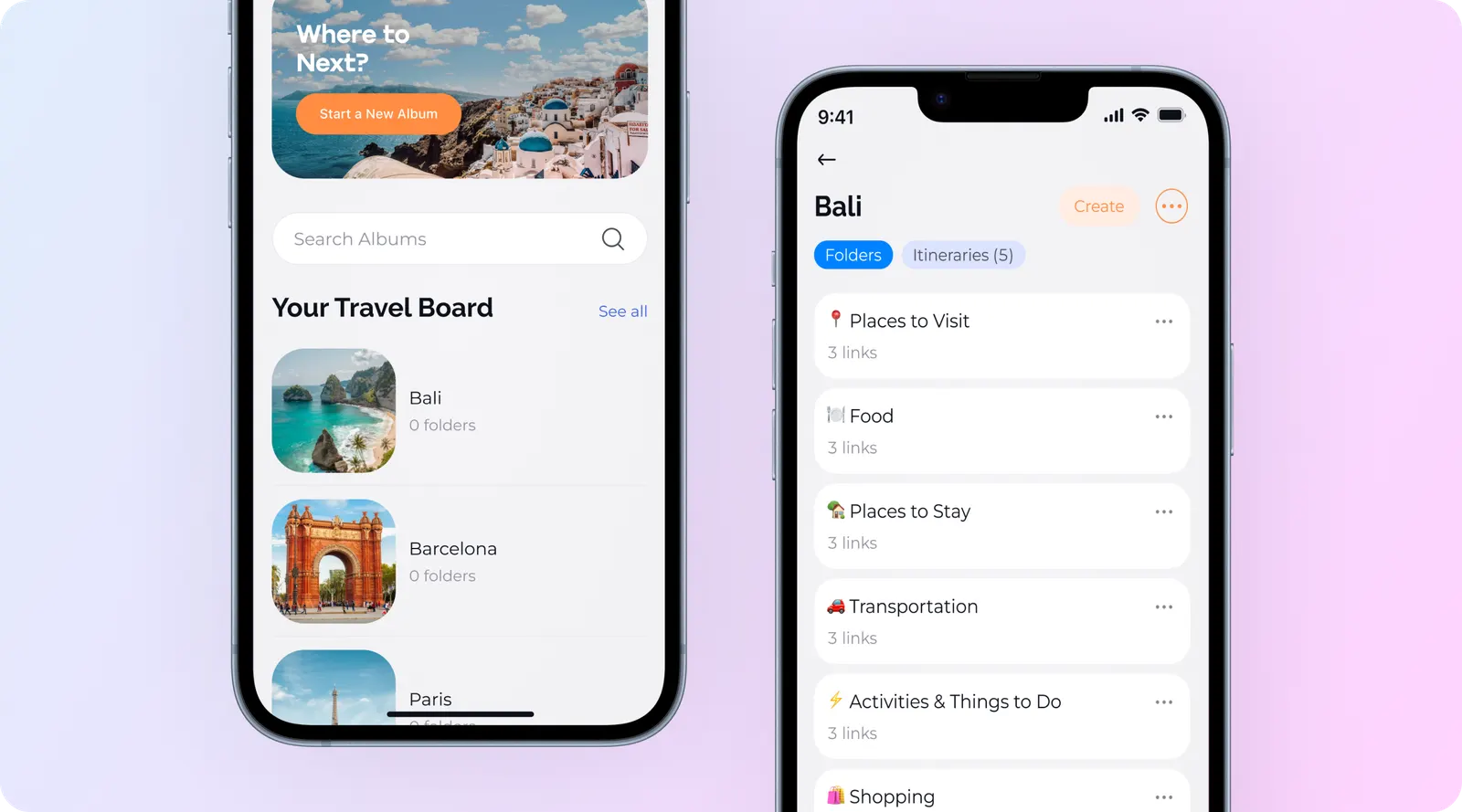
We built an AI travel planner that imports saved posts, works out where each one is, groups them by destination and sequences them into a day-by-day itinerary.
The planner only adds its own suggestions when the user asks, so the trip is built from what the traveller already chose.
Import from where ideas live
Users bring in Instagram saves, TikTok, Pinterest and pasted links, the places their travel ideas already sit.
Location extraction
This is the hardest part of the build. The system reads geotags when they exist, and otherwise parses captions, on-screen text and comments to identify which restaurant in which city a short video shows.
Automatic grouping by destination
Once places are identified, saved items sort themselves by destination with no manual tagging.
Smart itinerary builder
The builder orders saved places around opening hours, seasonal closures and travel time between stops. It flags an overbooked day instead of quietly producing a plan that cannot work, and fills gaps only on request.
Group planning and export
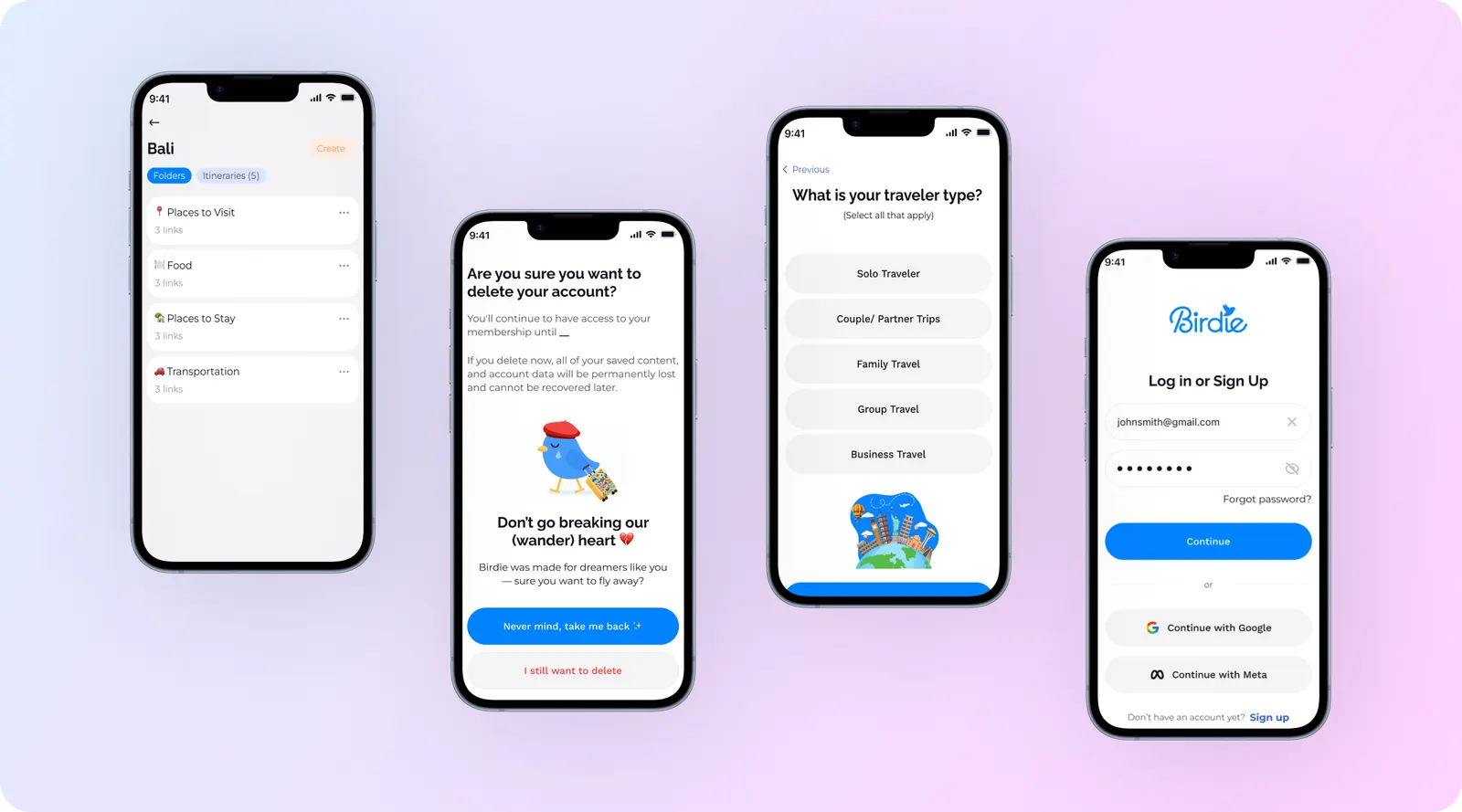
Friends edit trips together and vote on optional stops. Finished plans export to PDF and calendar for offline use.
Screens and design system

The result
The key number is thirty-four saved posts becoming one real plan per trip. Closing that gap is the reason the product exists and the reason people return instead of trying it once.
Affiliate revenue covers the infrastructure and the team. Two travel brands now white-label the engine for their own audiences, and flight search is the next integration.