
Software development
Customer Portal Development: Custom Client and Self-Service Portals Built by Our In-House Team
Written scope and quote after the call. NDA on request. You own the code.
Quick answer
Customer portal development is building the secure, logged-in place where your customers book, order, pay, upload documents and check status without calling you. Our in-house engineering team builds custom client portals, B2B customer portals and self-service portals, and we tell you when an off-the-shelf or Airtable portal is enough. Recent portal builds went live in 5 to 10 weeks, including Spirit Airlines' group booking, where the average group quote fell from 3 days to 40 minutes.
Builds like this
Part of the guide: Software development
Key takeaways
- A customer portal is a secure, logged-in web app where each customer sees only their own records and can act on them: book, order, pay, upload, approve and track status.
- Our portal builds went live in 5 to 10 weeks: Jetstarix in 5, Infuse CTL in 7, Miami Dolphins in 9 and Spirit Airlines in 10.
- Results from those builds: Spirit's group quote fell from 3 days to 40 minutes; Infuse CTL's booking-to-appointment time dropped to 4 hours at median from three to five days by phone; Jetstarix's quote completion rose from 22% to 71%.
- Gartner reported in Aug 2024 that only 14% of customer service issues are fully resolved in self-service, so a portal has to complete real tasks; hosting FAQs is not enough.
- For smaller groups who can live with Airtable's look, Airtable Portals start at $120 a month for 15 portal seats on Team and $150 on Business, and read-only portal users are not billed (Airtable support, checked Oct 31, 2026). If that is enough, we will tell you.
Customer portal development is building the secure, logged-in web app where your customers do business with you on their own: book, order, pay, upload documents, approve quotes and check status, each seeing only their own records. We build custom client portals, B2B customer portals and self-service portals for companies whose customers currently email and call for things a screen could handle, and we connect them to your CRM and billing. Our in-house engineering team delivers the whole build, from scoping and design to launch and support. For Spirit Airlines, the group booking portal cut the average quote for parties of 20 or more from 3 days to 40 minutes, and our portal builds went live in 5 to 10 weeks. When a full build is more than you need, we will say so, and an off-the-shelf tool or Airtable’s own portals may be enough.
From our Spirit Airlines, Infuse CTL and Jetstarix case studies.
What does a customer portal include?
A portal is two products: the customer side and the admin side your team works in. This is what we typically build:
| Area | Customer side | Your team’s side |
|---|---|---|
| Access | Sign-in, password reset, optional single sign-on and multi-factor sign-in | User and role management, company accounts with several users |
| Dashboard | What needs attention: open quotes, upcoming bookings, unpaid invoices | Queue of requests, expiries and exceptions |
| Core actions | Book, order, request a quote, approve, reschedule, cancel | Approvals, pricing rules, overrides with a reason logged |
| Payments | Deposits, balances, saved methods, receipts | Payment status, reminders, refunds |
| Documents | Upload, download, e-signature, contracts | Completeness checks, requests tied to milestones |
| Status and messages | Live status, notifications, messages tied to the record | Full history per account, internal notes |
| Integrations | Single source of truth for the customer | Sync with CRM, billing, booking or ERP systems |
| Reporting | Account history, exports | KPIs, conversion, workload, audit log |
The three portal types we get asked for most:
- Client portal (professional services, agencies, finance, real estate): documents, milestones, approvals and messages around a project or transaction.
- B2B customer portal (suppliers, distributors, service companies): company accounts with buyer, finance and admin roles, account-specific pricing, reorders, invoices and delivery tracking.
- Self-service portal (any business with repeat customer requests): status, changes, bookings, downloads and answers without contacting staff.
With every portal build you also get a written scope and quote after a free 30-minute call, a clickable design you approve before code is written, a working demo every week, permission tests across account boundaries, deployment to a cloud account in your name, and a handover with a recorded video walkthrough and written documentation. Not included: fees for third-party services the portal uses (hosting, payment processing, e-signature, SMS or email sending) are paid by you directly to those vendors, and support after launch is billed per hour.
Customer portal case studies
Spirit Airlines: a group booking portal for organisers and the group desk
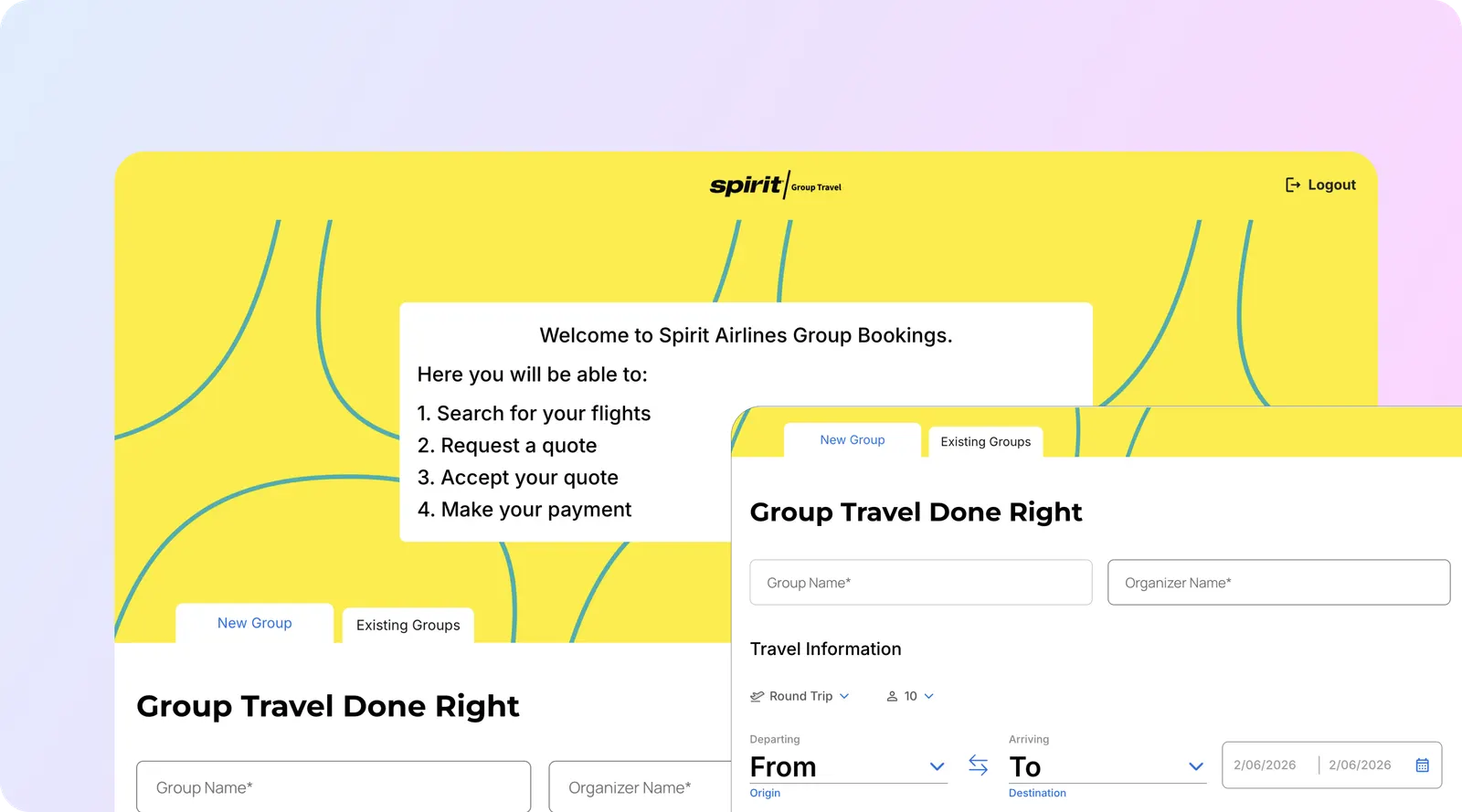
Group organisers used to wait days for a manually priced quote. We built a quote request with CSV manifest upload, pricing that checks live fare inventory through Sabre, deposit-and-balance payments through Stripe with reminders at 30, 14 and 3 days, and manifest editing until 72 hours before departure. The group desk works from its own dashboard with role-based pricing controls. The average group quote fell from 3 days to 40 minutes, payment collection from 11 days to 4, and group bookings grew from 140 to 610 a month within two quarters (live in 10 weeks).
Infuse CTL: booking, intake and records for in-home treatment
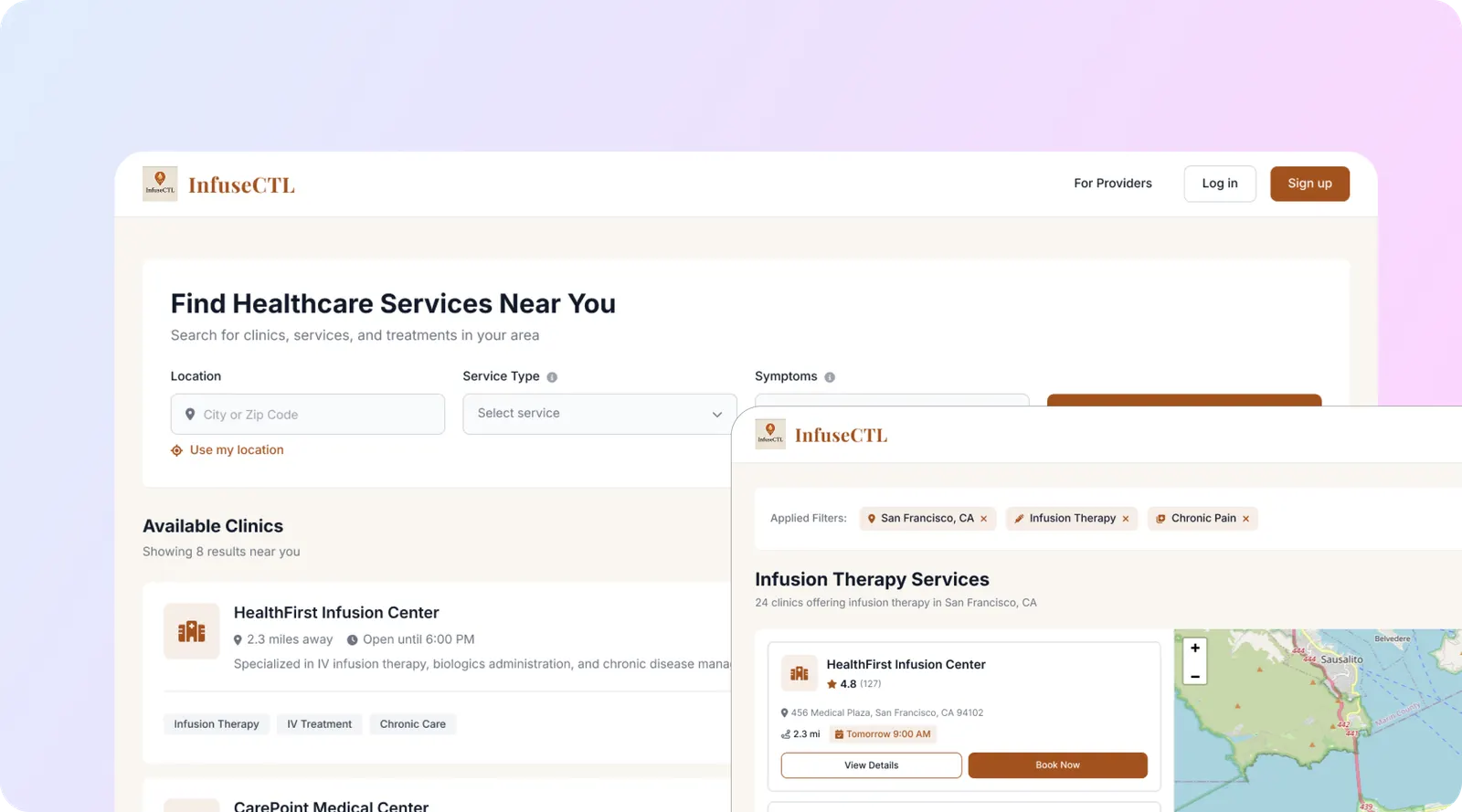
Patients booked by phone and waited three to five days. We built a patient portal with intake and screening before confirmation, consent capture and payment documentation, a clinician app with the day’s route, and route-aware scheduling behind it, with HIPAA-aligned controls for storage. Booking to appointment now takes 4 hours at median, cancellations fell from 24% to 7%, clinician utilisation rose from 52% to 79%, and 1,900 licensed clinicians were onboarded across 14 states (built in 7 weeks).
Jetstarix: a charter quote flow high-value clients actually finish

The old enquiry form lost most charter clients before they asked for a price. We rebuilt the client-facing experience around a short progressive quote flow (route, dates, party size, then optional detail), fleet pages with cabin and range data, and an empty-leg listing the team updates without a developer. Quote request completion rose from 22% to 71%, charter enquiries rose 2.8x within two months, and pages load in under 1.2 seconds on mobile (built in 5 weeks).
Miami Dolphins: a season-long portal for suite holders
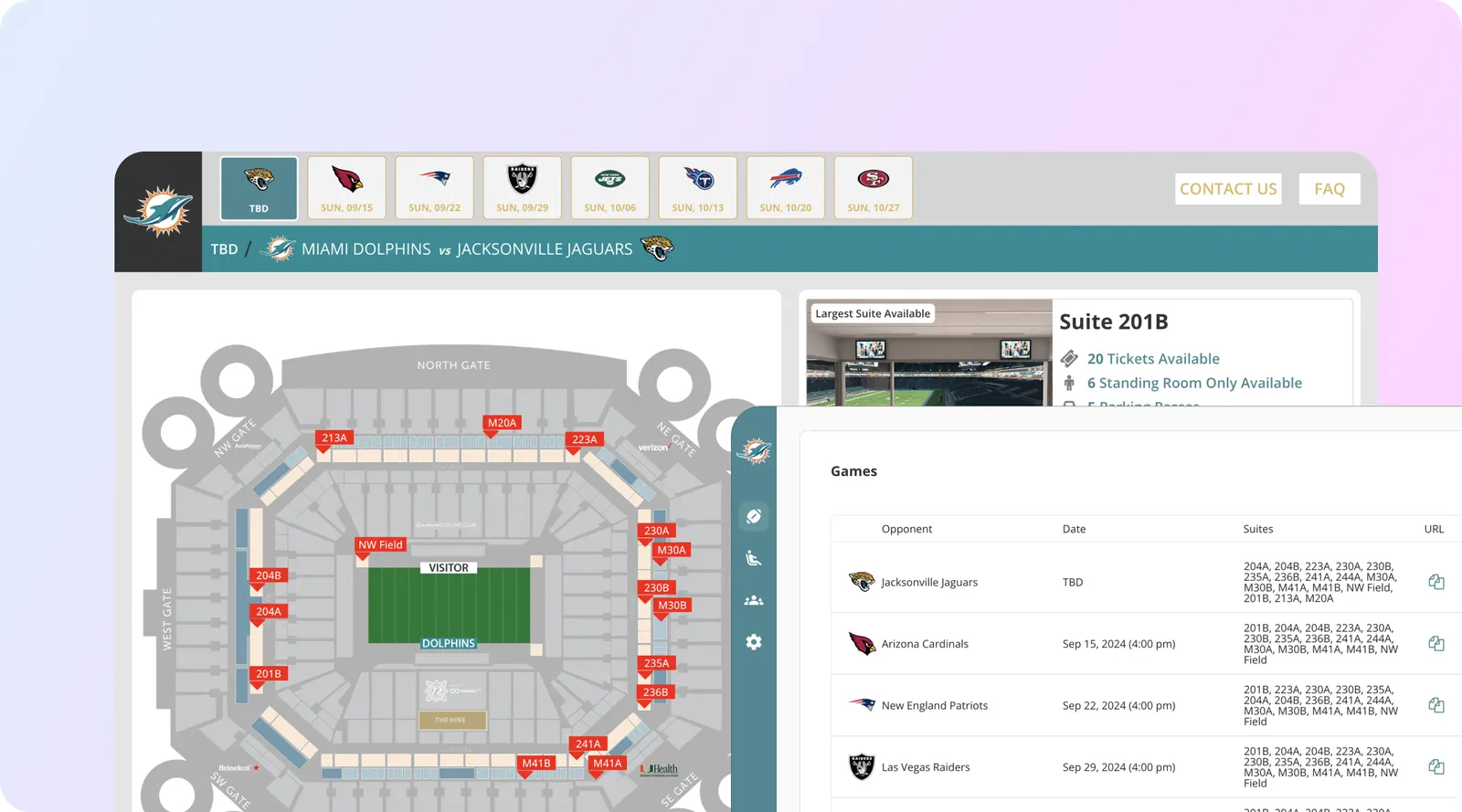
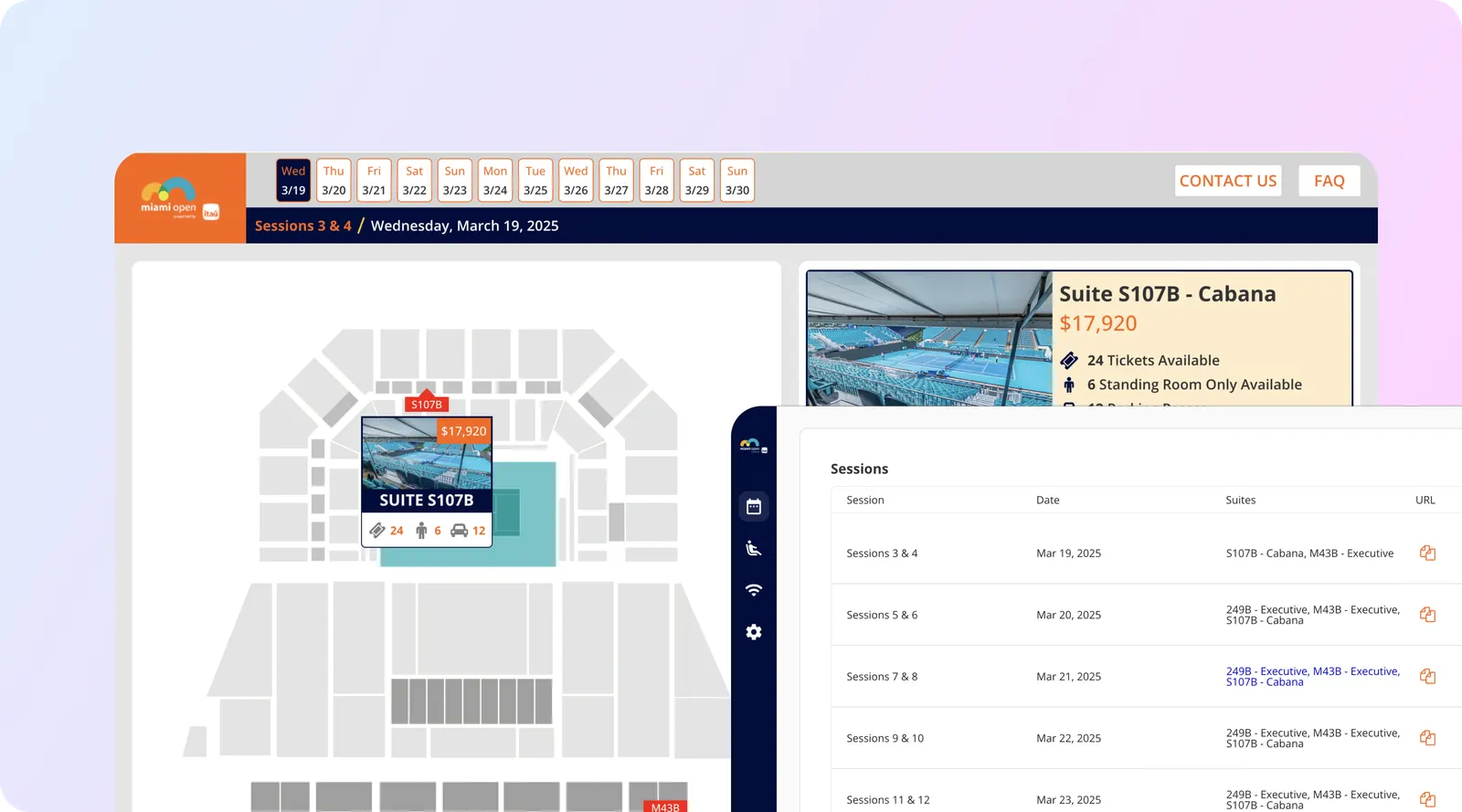
On the Miami Dolphins premium suites platform, suite holders get a client portal to manage guest lists, catering orders and ticket distribution across a season, on top of self-serve suite purchase with contracts and e-signature. Enquiry to signed contract fell from 21 days to 6, and 41% of suite sales now complete without a sales call (built in 9 weeks).
Custom client portal vs off-the-shelf vs Airtable: which should you choose?
| Off-the-shelf portal software | Airtable portal | Custom portal | |
|---|---|---|---|
| Time to launch | Days to weeks | Days to a few weeks on an existing base | 5 to 10 weeks on our builds |
| Upfront cost | Low | Low (setup work) | Highest |
| Running cost | Per-seat or per-client subscription | From $120/month for 15 portal seats on Team, $150 on Business; read-only users not billed | Hosting and maintenance, no per-seat fee |
| Branding and login | The vendor’s | Airtable’s interface; sign-in page branding on Business and Enterprise Scale | Your domain, design and login, including SSO |
| Workflow fit | The vendor’s process | Whatever Airtable interfaces can express | Exactly your process and rules |
| Integrations | The vendor’s connectors | Airtable automations and API | Any system with an API, server-side |
| Scale limits | Plan limits | One portal per base; base record limits; API rate limits | Set by your architecture |
| Verdict | Standard process, few users | Data already in Airtable, dozens to low hundreds of users, mostly viewing | Portal is part of the product or sale, many users, own systems |
Airtable figures from Airtable support: Using Airtable Portals for external collaborators, checked Oct 31, 2026.
The arithmetic that usually decides it: 15 Airtable portal seats cost $1,440 a year on Team or $1,800 on Business, before your internal Airtable seats ($20 and $45 per user per month billed annually, per the Airtable pricing page, checked Oct 31, 2026). For a firm sharing project status with 40 clients, mostly read-only, that is a sensible portal at a fraction of a custom build. For a company whose customers book, pay and edit records in their thousands, or whose portal must sit on its own domain with its own login, custom pays back. If you take the Airtable route, test the permission settings before a client sees anything.
How long does customer portal development take?
Your custom customer portal takes about 8 weeks to a first release with us: that is the median for the customer portals in our 44-build timeline study, with a range of 6 to 9 weeks. Portals sit at the longer end of our builds because they serve two audiences, your customers and your team, from one set of records.
What adds weeks to your portal:
- Integrations. Each live connection to a CRM, billing, ERP or an industry system adds work. Spirit Airlines’ group booking portal checks live fare inventory through Sabre and took 10 weeks.
- Roles. Company accounts with buyer, finance and admin users, or outside parties such as lenders and inspectors on Homer, take longer than one customer role.
- Live data. Live inventory, pricing or status that several people change at once needs locking rules and more testing.
- Compliance. Health or financial records add audit logs, retention rules and stricter access tests.
A focused front end can be quicker: the Jetstarix quote flow went live in 5 weeks. On the free call we tell you where your scope lands and include a week-by-week plan in the written quote. The full data is in our app development timeline research.
How does our customer portal development process work?
- Discovery (week 1). We list the requests customers send by email and phone today, rank them by volume, and pick the ones the portal must complete end to end. We map roles, data ownership and systems.
- Design (weeks 1 to 2). Clickable screens for the customer and admin sides, reviewed with a few real customers where possible.
- Data and access model (week 2). Accounts, roles and which records each role can see and change. This is the part that decides security, so it is designed before any screens are coded.
- Build (weeks 2 to 8). Weekly staging releases; integrations with CRM, billing, booking or ERP systems built and tested against sandbox accounts.
- QA (last 1 to 2 weeks). Automated tests on sign-in, payments and approvals, plus tests that try to read another account’s data. Mobile and browser checks.
- Launch and onboarding. Invites, imported accounts, a soft launch with a customer group, and a help page for the first questions.
- Handover and support. You get a recorded video walkthrough, written documentation, and the code and accounts in your name. After that, monitoring, updates and the next requests to move into the portal are billed per hour.
How much does customer portal development cost?
Our price. Our app and web app builds typically cost $7,000 to around $25,000 to $30,000, depending on features. A focused first version sits near the low end; many features, user roles, payments and integrations land near the top. We work project-based or hourly. After a free 30-minute call we send a written scope and quote, and you own the code at handover. Full details are on our pricing page. At the light end, an Airtable portal costs $120 to $150 a month for 15 seats in Airtable fees plus setup.
| Cost driver | Lower end | Higher end |
|---|---|---|
| Roles | Customer and admin | Company accounts with buyer, finance and admin roles, plus partners or field staff |
| Core actions | View status and documents | Booking, ordering, payments, contracts, rescheduling |
| Integrations | One CRM | CRM plus billing, ERP, booking or industry systems such as Sabre |
| Data | Low-risk business data | Health or financial data with audit and retention rules |
| Login | Email and password | Single sign-on with your product or a customer’s identity provider |
| Migration | New accounts only | Years of customer records and files to import |
Each portal is scoped and quoted in writing as a fixed price after a free 30-minute call, and if Airtable or an off-the-shelf tool is the better buy, we say so on the call. For a rough number before the call, estimate your build in two minutes.
Who do we build customer portals for?
We build portals for service businesses whose clients chase status by email, B2B companies whose customers order and pay through account managers, healthcare and home services, travel, sports and events, and startups whose portal is the product.
- Service businesses whose clients chase status by email: real estate, finance, legal, agencies. Homer’s transaction platform put buyers, agents, lenders and inspectors on one timeline with per-party permissions.
- B2B companies whose customers order, reorder and pay invoices through account managers.
- Healthcare and home services that need booking, intake and consent online, as with Infuse CTL.
- Travel, sports and events that sell configurable packages and manage guests, as with Spirit Airlines, Jetstarix and the Miami Dolphins.
- Startups whose portal is the product. See SaaS development and marketplace app development.
How to choose a customer portal development company
- Live portals with results. Ask for portals in production and the numbers that moved. Ours are on our work page.
- Permission testing. Ask exactly how they test that one customer cannot see another’s records. A vague answer is a red flag.
- In-house engineers. Ask who writes the code. Ours is our own 16-person engineering team.
- Fixed written scope. You should know what launches, when and for how much before work starts.
- CRM and billing integration. The portal should update your CRM and billing, not create a second customer database.
- Ownership. Code, domain, hosting and third-party accounts in your name.
- Honest buy-vs-build advice. A partner who only builds custom will never tell you Airtable Portals would do. We will.
Why aibrevo for customer portal development?
- In-house engineering team. 16 engineers in San Francisco led by co-founder and CTO Shivam Pujara, plus 30+ remote specialists.
- 200+ software projects delivered, including portals for Spirit Airlines, Infuse CTL, Jetstarix and the Miami Dolphins.
- CRM integration built in. We set up and integrate GoHighLevel, HubSpot, monday.com and Pipedrive, so portal activity lands in your CRM. See CRM integration services.
- Custom build, priced against the alternatives. A custom portal from our web app development team, weighed against what Airtable Portals or an off-the-shelf tool would cost you, on your numbers.
- Support after launch, billed per hour, through our software maintenance and support service.
We build customer portals for companies across the US, working remotely from San Francisco; see app development by state and city.
Planning a customer portal? Book a free 30-minute call or send a message with who your customers are, the requests they send you most, roughly how many will log in, and the systems involved. We will tell you whether a custom portal, an Airtable portal or an off-the-shelf tool fits, and send a written quote.
Sources
All pages opened on Oct 31, 2026.
- Gartner, Gartner Survey Finds Only 14% of Customer Service Issues Are Fully Resolved in Self-Service, press release, Aug 19, 2024.
- Airtable Support, Using Airtable Portals for external collaborators; Airtable, pricing.
- aibrevo case studies: Spirit Airlines, Infuse CTL, Jetstarix, Miami Dolphins, Homer.