Software Testing and QA · User testing and QA marketplace
Probado: a user testing marketplace for startup product teams
Probado is a QA marketplace that connects product teams with testers and automated testing. We built it in 8 weeks. A full test round with real users now takes 4 days instead of 3 weeks and costs $390 instead of $4,800, and 2,900 startups used it in the first year.
- Client
- Probado
- Industry
- Software Testing and QA
- Built
- Web app
- Timeframe
- 8 weeks
What changed
- 3 weeks to 4 daysfor a full test round with real users
- $4,800 to $390cost per test round
- 2,900 startupsusing the platform in its first year
- 18,000 sessionscompleted by testers
- 3.6x more bugscaught pre-launch, compared with the same teams' earlier releases
- 8 weeksfrom start to finished build
Results as reported for this build after launch.
The challenge
Startups could not get testing they could pay for and rely on, so products launched with usability and quality problems still unresolved.
Early-stage teams do know user testing matters. They skip it because a traditional research round runs to several thousand dollars and three weeks, which is longer than their whole release cycle.
So they ship first and learn from support tickets and churn. Our client had seen this happen across a portfolio of companies and could name products that failed on usability issues a few test sessions would have exposed.
Existing testing panels were designed for enterprise research spending: careful recruiting, moderated sessions and a formal report. That suits a big study and is far too heavy for a founder who just wants to know if eight people can get through signup. No one served the need for a fast, low-cost, directional answer.
What we built
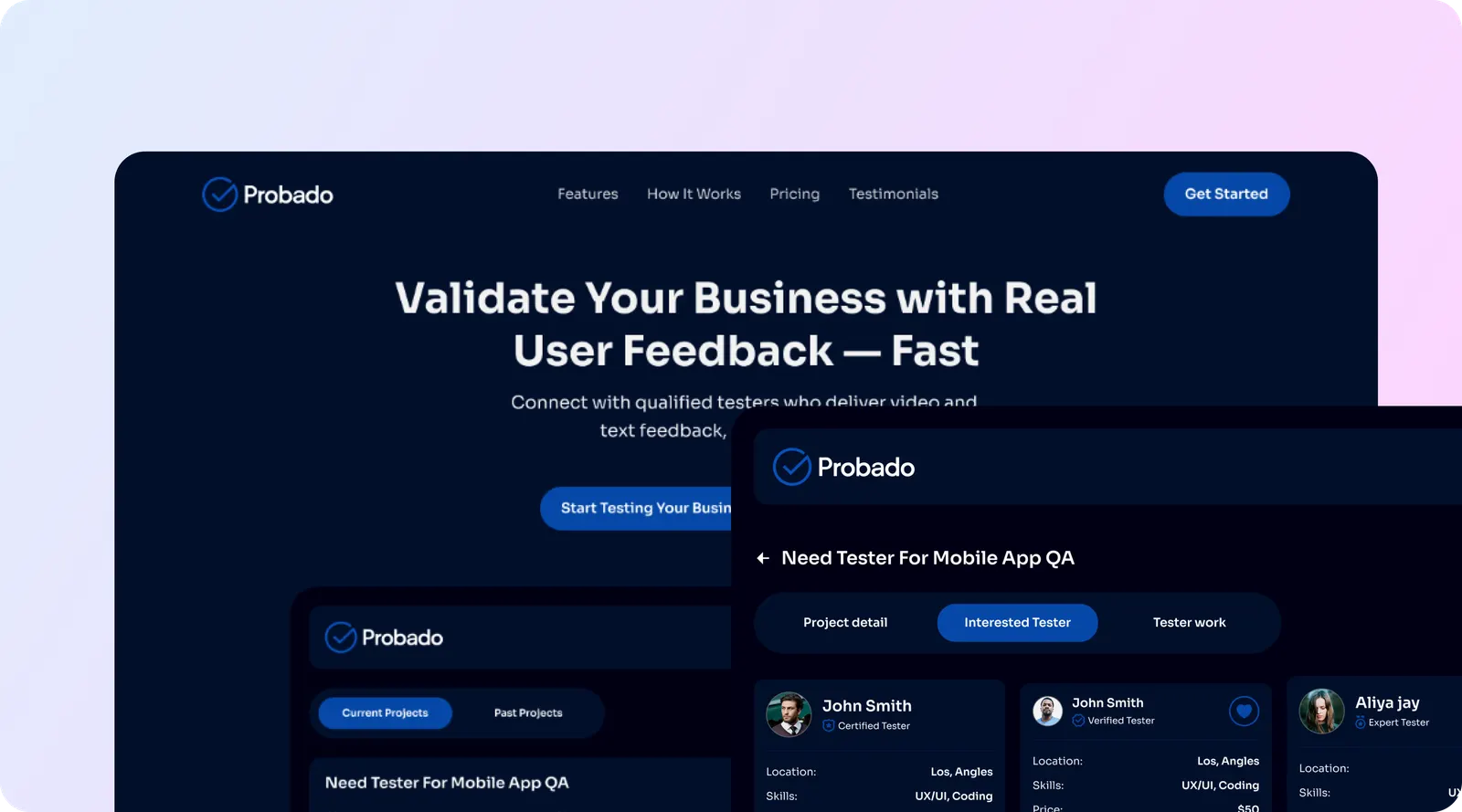
We built a testing marketplace that links product teams with screened testers and automated QA options, so quality risks surface before launch rather than after.
The core design choice was unmoderated, recorded sessions with automatic analysis, which is what lets a full round finish in four days.
Segmented tester pool
Testers are recruited and screened, then segmented by demographic, technical proficiency and industry, so teams pick who they need without running recruitment.
Unmoderated recorded sessions
Screen, audio and interactions are captured while testers complete defined tasks, which makes the four-day turnaround possible.
Auto-flagged transcripts
Sessions are transcribed and timestamped against tasks, with sentiment and hesitation points flagged so founders jump to the key moments instead of watching eight hours of video.
Cohort metrics and A/B comparison
Task completion and time-on-task are measured across the cohort, and two versions of a product can be tested against each other.
Bug reports and templates
A bug report flow produces reproduction steps, and ready templates cover onboarding, checkout and first-run experience.
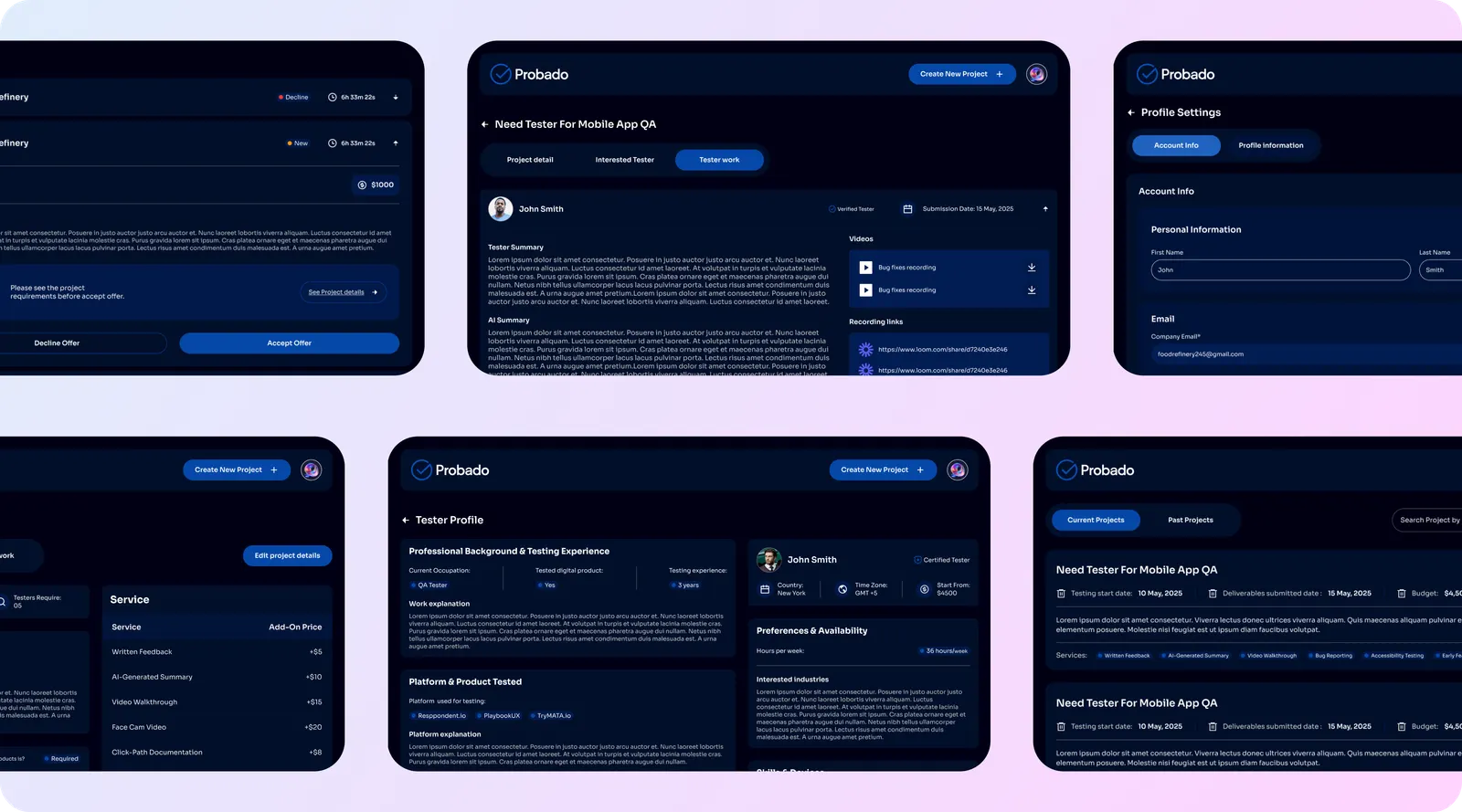
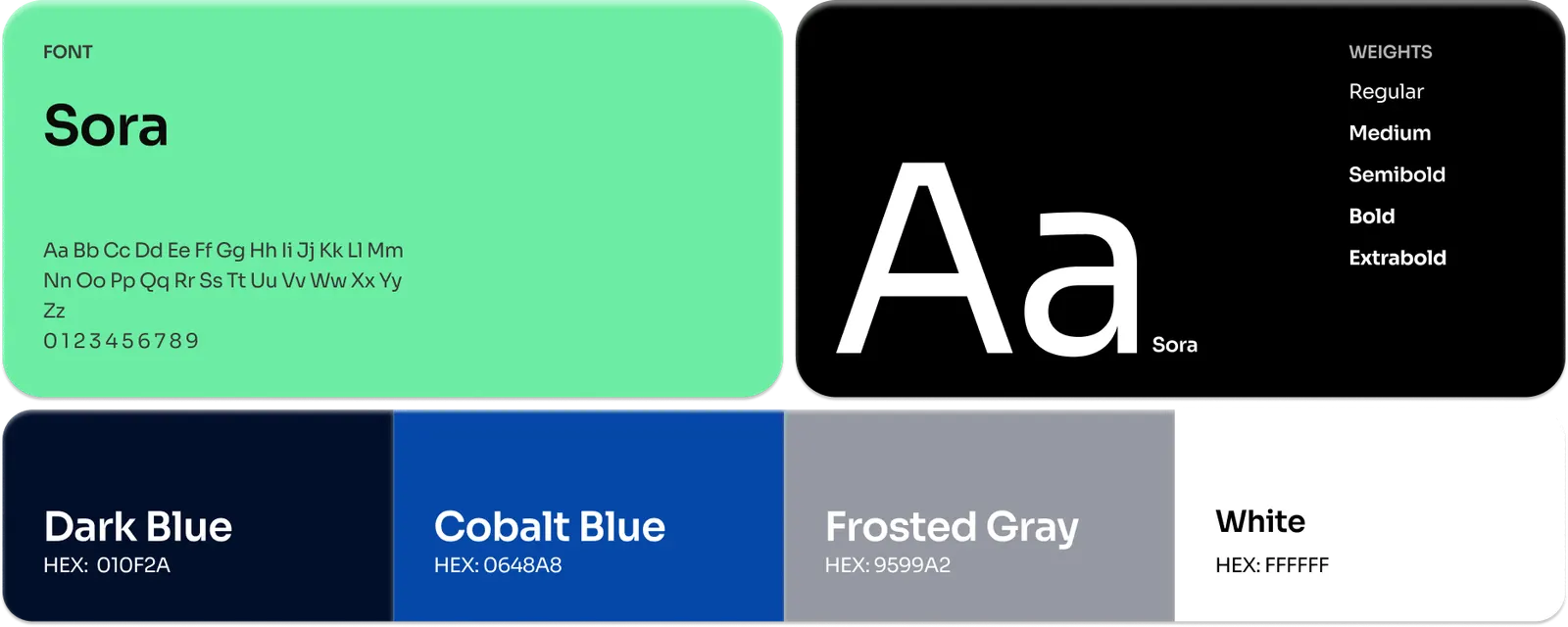
Screens and design system
The result
Speed and cost moved together, and that is what changed behaviour. At four days and under four hundred dollars, a test round fits inside a sprint, so testing became a routine habit rather than a launch milestone.
The 3.6x rise in pre-launch bug detection is the number people quote. Our client puts more weight on the habit change: teams that test every sprint make different product decisions from teams that test only before launch.