Marketing · Marketing campaign automation platform
Campaign Sync: one platform for email and social campaigns
Campaign Sync lets a marketing team plan, publish and report on email and social campaigns from one place. We built it in 7 weeks. Campaign setup fell from 3 days to 4 hours, on-schedule posting rose from 41% to 94%, and weekly reporting dropped from 9 hours to 20 minutes.
- Client
- Campaign Sync
- Industry
- Marketing
- Built
- Web app
- Timeframe
- 7 weeks
What changed
- 3 days to 4 hoursfor campaign setup across email and five social channels
- 41% to 94%of planned content now published on schedule
- 9 hours to 20 minper week to assemble reporting
- 340 campaignsrun through the platform in year one
- 4 people, not 7a team of four now runs what previously needed seven
- 7 weeksfrom kickoff to a finished build
Results as reported for this build after launch.
The challenge
The team ran campaigns across tools that did not connect. Messages drifted between channels, work was repeated, and nobody could see how a campaign performed across all of them.
Two reporting products had been tried. Both read data well, but neither touched how content was created, so the manual work just moved somewhere else.
Email went out from one tool, social posts from another, paid ads from each network's own ad manager, and everything was tracked in a shared spreadsheet that stayed accurate for about two days after each update.
The obvious symptom was inconsistency. A campaign launched on email with one message and showed up on LinkedIn a week later with different copy, because whoever scheduled social was working from an older brief. Less than half of planned posts went out on the intended day.
The hidden problem was attribution. Results sat in four dashboards with four naming schemes, so no one could say which channel had produced what.
What we built
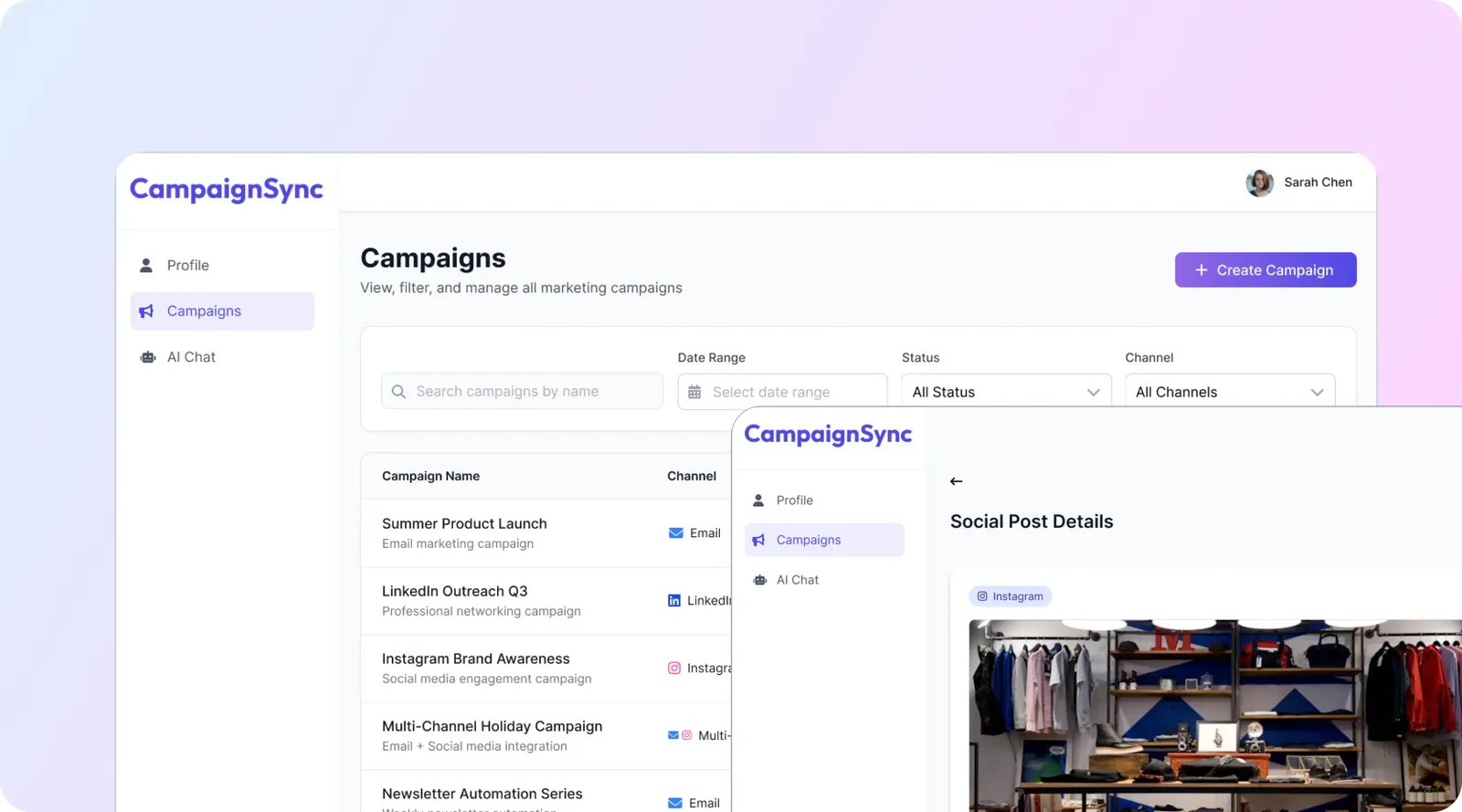
We built a campaign platform where one brief publishes to email and five social channels, with tracking set up at the moment a campaign is created.
Assets, approvals, the calendar, pacing alerts and reporting all live in the same system, so the plan and the results share one source.
One brief, every channel
A single campaign definition publishes to email and the social channels, so the message cannot drift between channels or between the people scheduling them.
Enforced UTM templates
UTM tags are applied when a campaign is created instead of being left to habit. This is what makes the reporting possible.
Versioned asset library and approvals
Creative lives in a shared library with version control, so anything live traces back to an approved version. An approval step between draft and publish replaces the old email thread.
Cross-channel calendar
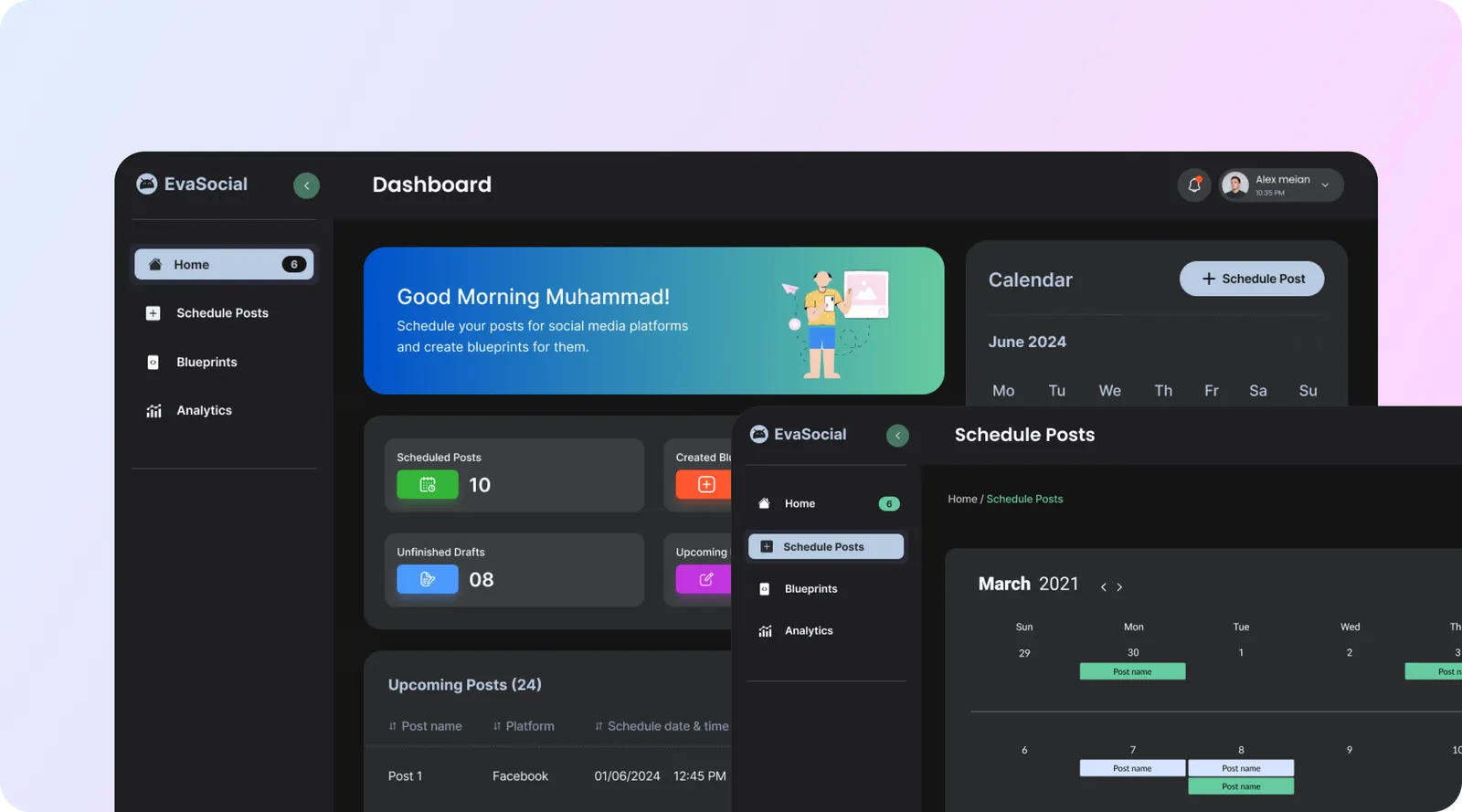
Every channel appears in one calendar, with a warning when two campaigns target the same segment in the same week.
Pacing alerts and unified reporting
Spend and pacing alerts fire as soon as numbers drift, not at month end. Reporting pulls spend, opens, clicks and conversions into one attribution view.
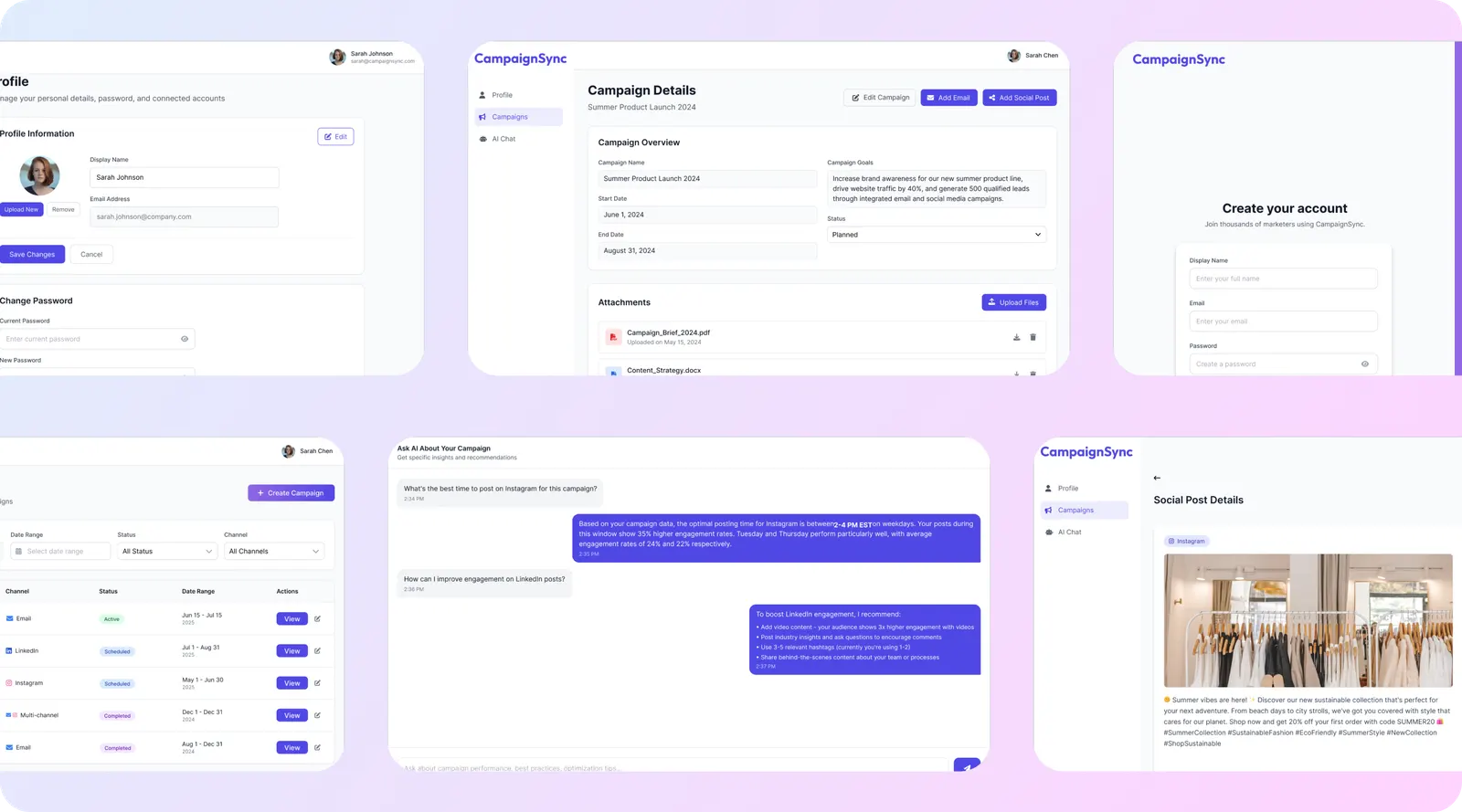
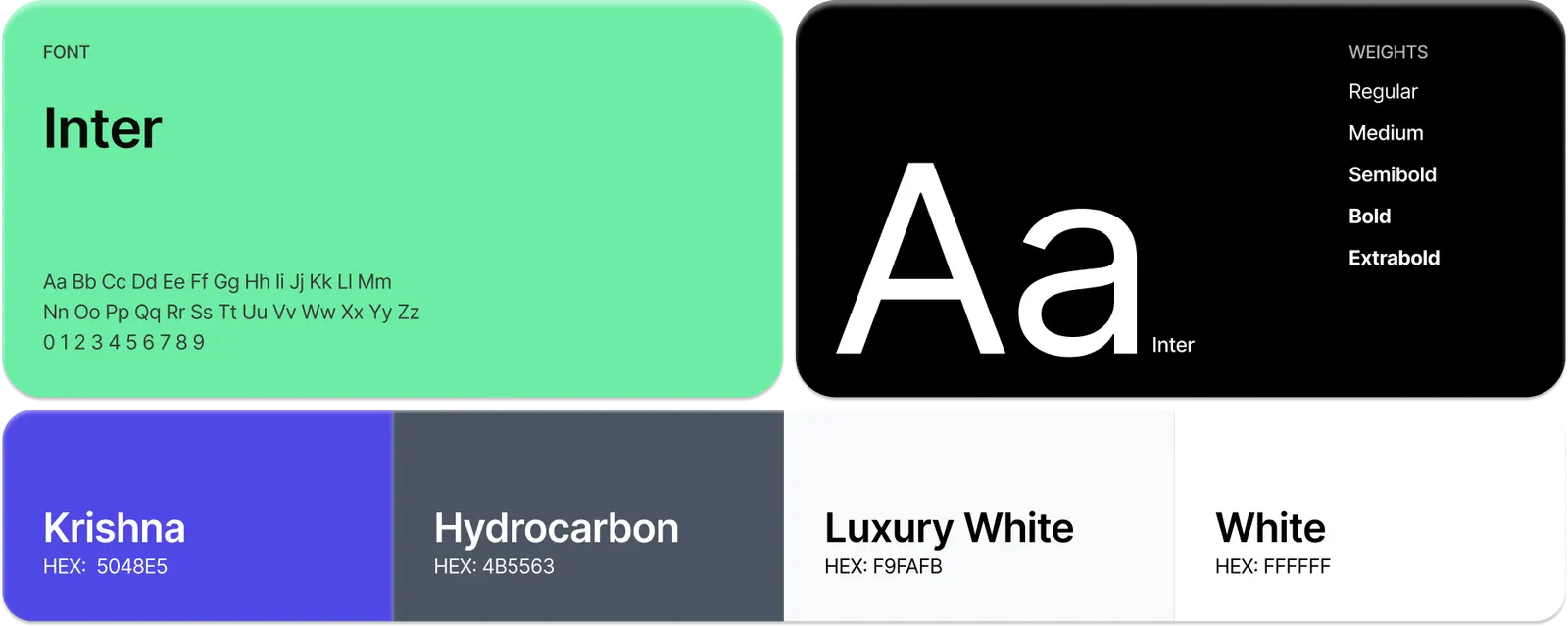
Screens and design system
The result
Consistency mattered most, and nobody had planned for it. Going from 41% to 94% of planned posts going out on time made the campaign calendar real, which changed how the team planned as well as how it shipped.
Four people now handle the work of seven, and the freed time went into testing rather than cutting staff. The reporting view is now what the board sees every quarter.