Healthcare (EMS) · Event staffing, scheduling and billing system
Life Line Ambulances: event crew scheduling and billing in one system
Life Line Ambulances supplies medical crews to events, and its scheduling, certification records and invoicing lived in three disconnected places. We built one staffing and billing system with conflict checks, certification tracking and on-site clock-in, which cut staffing conflicts by 89% and the post-event invoicing cycle from 24 days to 6. It was built in 8 weeks.
- Client
- Life Line Ambulances
- Industry
- Healthcare (EMS)
- Built
- Web and mobile
- Timeframe
- 8 weeks

What changed
- 89% fewer conflictsstaffing conflicts went from routine to rare
- 24 days to 6invoicing cycle after an event
- 76% fewer disputesbilling disputes, with hours captured on site instead of reconstructed
- 420 events staffedthrough the system in year one
- 14 hrs to under 3weekly scheduling admin
- 8 weekstotal build time
Results as reported for this build after launch.
The challenge
Scheduling and billing for event services needed operations, staffing and finance to work together, but each used its own disconnected tools. The result was staffing conflicts and errors in financial tracking.
Life Line Ambulances staffs medical crews at events, and three departments ran that work without a shared system. Operations kept the schedule in a spreadsheet, HR held certifications and availability elsewhere, and finance billed from paper timesheets that turned up days after an event, when they turned up at all.
Double-booking was the problem everyone could see. A paramedic would be rostered for two events on the same Saturday, someone would spot it on Friday, and a round of phone calls would follow. It happened often enough that operations routinely over-staffed to cover it, which quietly cut into the margin on every contract.
Billing was a bigger problem and harder to see. Hours were pieced together from memory and handwritten notes, so invoices went out late, clients questioned them, and there was rarely evidence to answer those questions. Money sat uncollected for weeks because nobody could prove who had worked when.
What we built
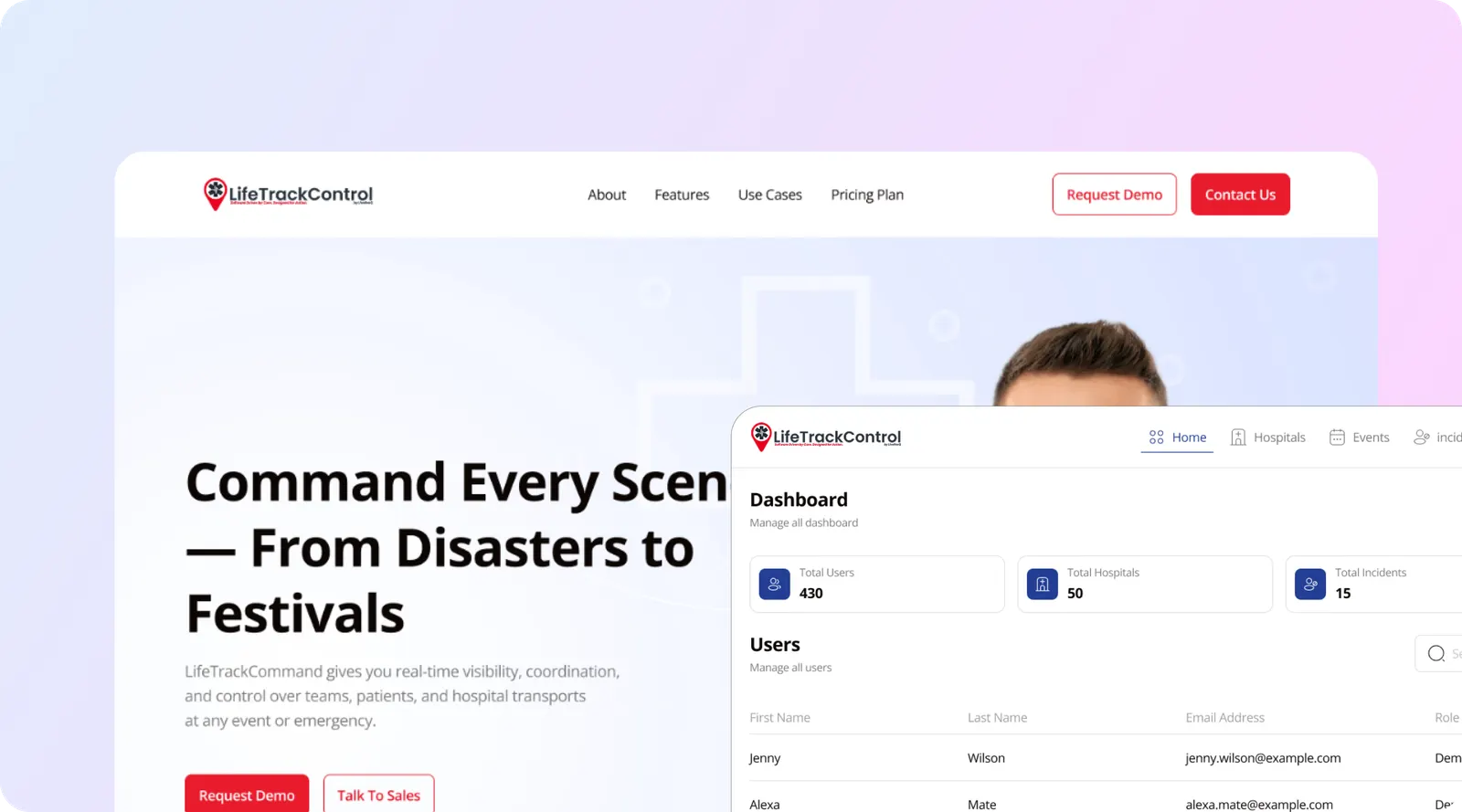
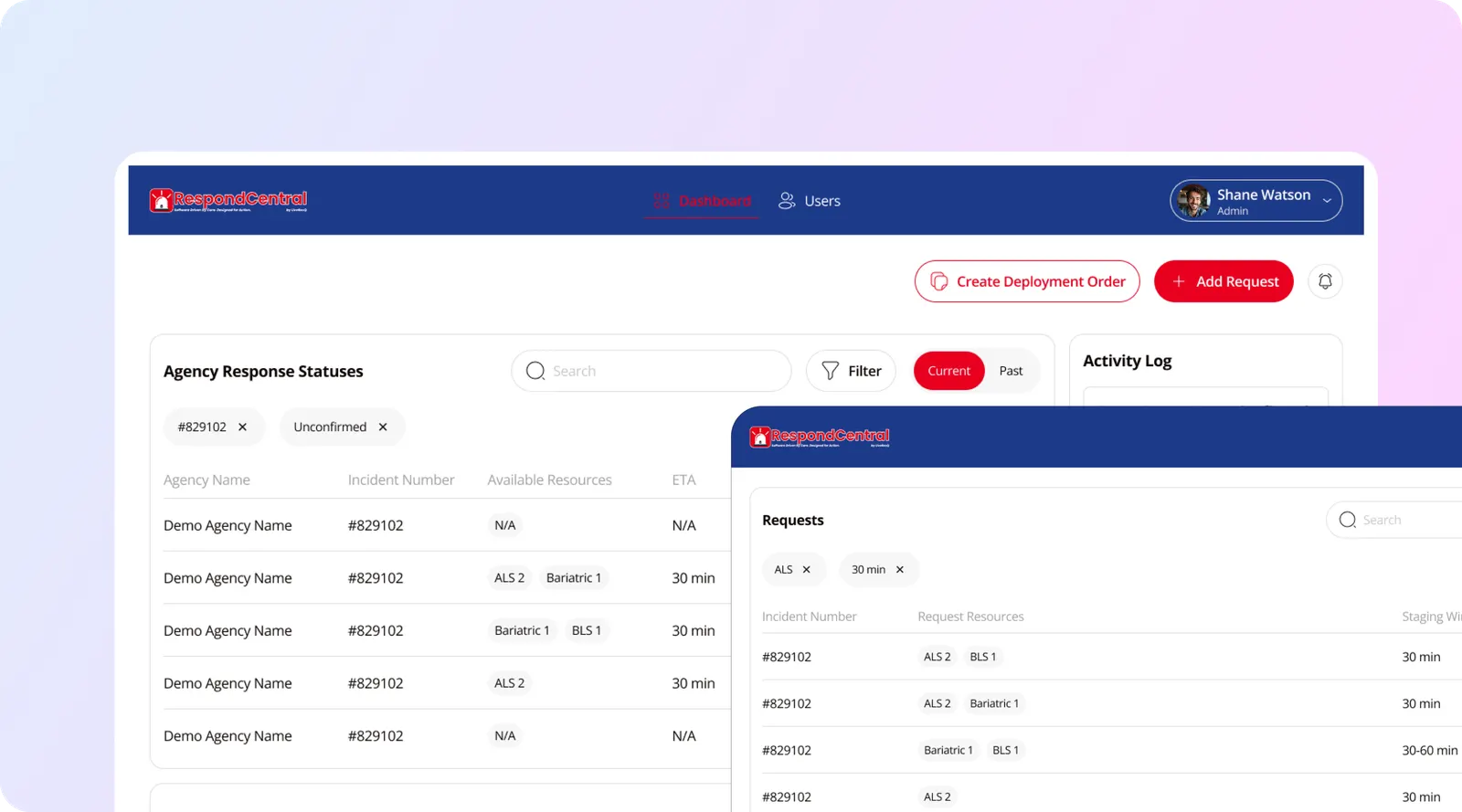
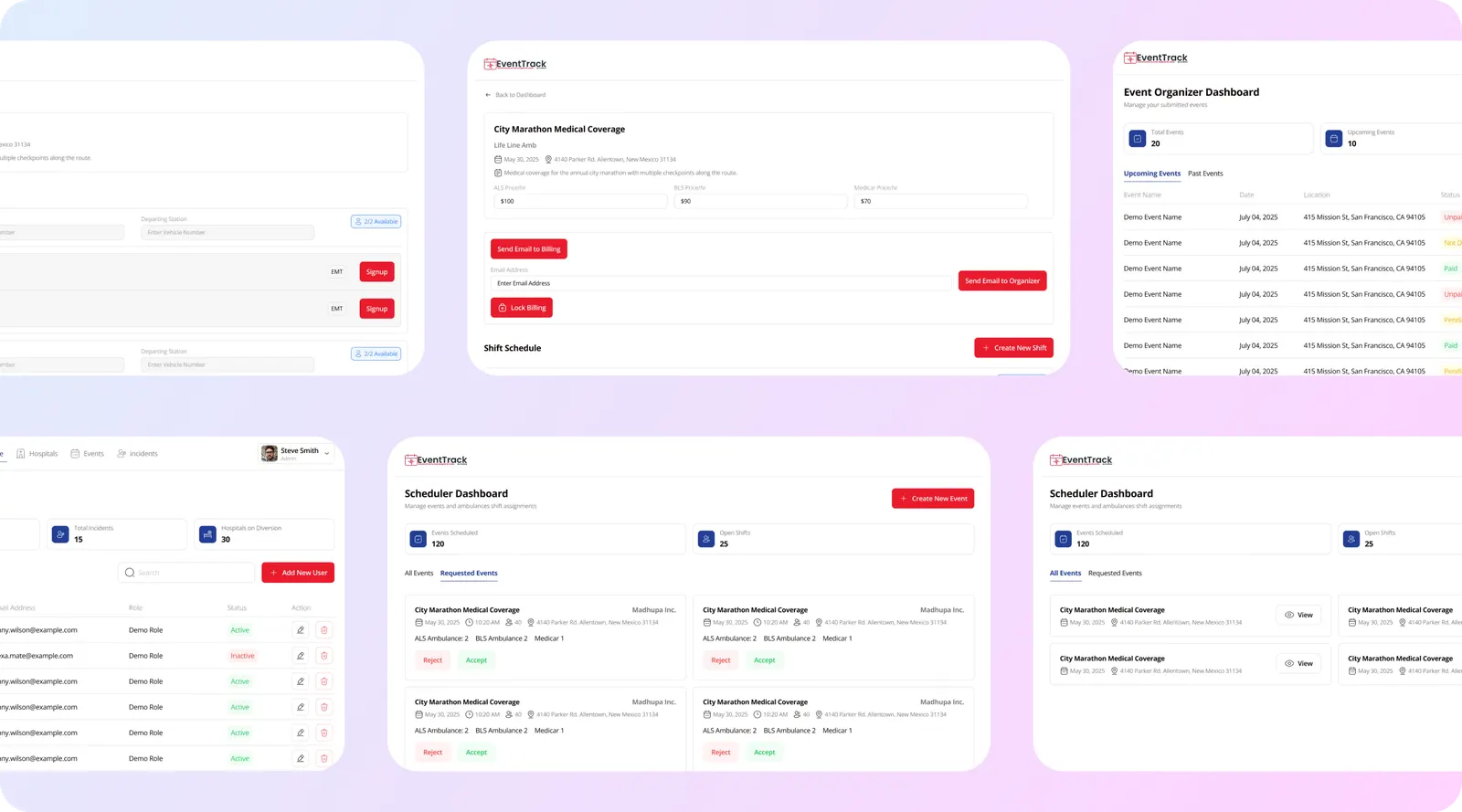
We built an event operations system that brings scheduling, resource allocation, invoicing and shift management into one place, so operations, staffing and finance work from the same records.
Event hosts can request services, managers assign crews, finance tracks invoices and payments, and employees can see open shifts and sign up for them directly.
One staffing calendar with conflict checks
Availability, certification status and assigned shifts sit in a single calendar, and conflicts are caught at the moment of assignment instead of being discovered later.
Certification tracking with automatic blocks
Each certification is stored with its expiry date, and a lapsed one blocks assignment automatically, removing a whole category of compliance risk.
Geofenced mobile clock-in
Crews clock in and out from a phone on site, geofenced to the event location, so hours are recorded as they happen.
Billing from captured hours
Invoices are generated from those recorded hours against the contract's rate card, including overtime rules and unsociable hours, with the supporting detail attached.
Central client contracts
Rates, minimums and cancellation terms for each client are held in one place.
Per-event margin view
Managers see staffing cost against contract value before an event runs, not after.
Screens and design system

The result
Bringing the invoicing cycle down from 24 days to 6 changed the company's cash position. That was what the finance director had asked for, and operations had not realised it was tied to how they scheduled.
Ending habitual over-staffing improved the margin on every contract, and that saving was larger than the cost of the system within the first year.